

























































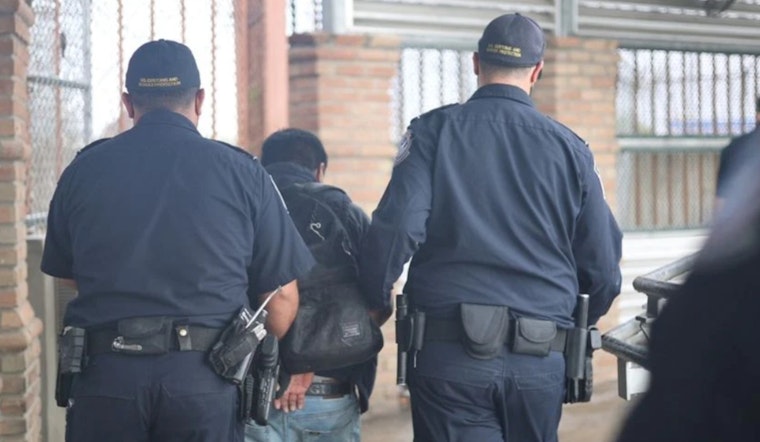
A man walking north across the Progreso International Bridge on Sunday did not make it far before federal officers pulled him aside. U.S. Customs and Border Protection (CBP) officers sent the pedestrian to secondary inspection, where they identified him as 40-year-old Daniel Galvan and matched his biometric data to a felony sexual assault warrant out of Dallas County. Officers then transported Galvan to a local jail for adjudication of the warrant.
As reported by WOAI, Galvan was initially flagged during routine primary screening when a database check suggested an issue. CBP officers referred him to secondary inspection, where biometric verification through national law enforcement systems confirmed an outstanding felony warrant issued by the Dallas County Sheriff’s Office. According to the outlet, officers took him into custody during standard traveler screening at the port.
Port Director Michael Martinez later credited the officers on duty, saying they “maintained strict vigilance” in stopping a traveler wanted on a violent sexual offense, WOAI reported. Officials note that frontline checks at ports of entry are reinforced by biometric tools and nationwide databases designed to flag individuals with active warrants.
How CBP's biometric checks work
According to U.S. Customs and Border Protection, officers routinely rely on biometric fingerprint checks and national systems such as the National Crime Information Center during secondary inspections. Those systems help verify travelers’ identities and surface any outstanding warrants. When a confirmed match comes back, CBP hands the person over to local law enforcement for adjudication. The agency’s public releases say these tools have led to arrests tied to a wide range of alleged crimes.
Repeat detentions at the port
The Progreso port has seen multiple similar cases this year. In October, CBP detained a traveler wanted on a South Padre Island sexual assault warrant, a case that likewise ended with the suspect being turned over to local authorities. Taken together, these incidents highlight how ports of entry function as enforcement choke points when warrants are active across different jurisdictions, and they reflect routine coordination between CBP and local agencies.
What happens next
Because the warrant in Galvan’s case was issued by the Dallas County Sheriff’s Office, county officials will determine whether to request a transfer for prosecution or pursue local adjudication. Those procedural decisions will hinge on the charging documents and any applicable court orders. The criminal allegations remain just that until proven in court, and the defendant is presumed innocent under the law. For information about the issuing agency, see the Dallas County Sheriff's Office contact page.





