

























































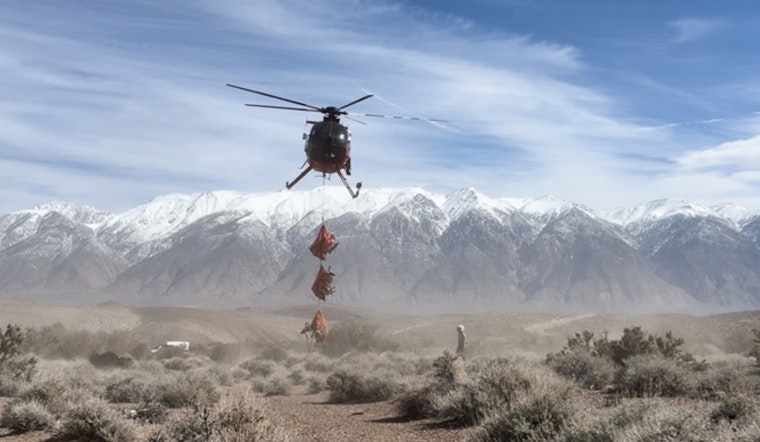
The mountains and forests of northern California are set to become research hubs as the California Department of Fish and Wildlife (CDFW) gears up for a series of wildlife research operations, announced for January 2026. These operations, according to CDFW's latest press release, will involve helicopter captures to fit various wildlife species with GPS collars aimed at tracking their movements and behaviors.
As reported by the CDFW, the upcoming month will see specialists taking to the skies above regions including but not limited to Alameda, Colusa, and Lake counties, utilizing helicopters to corral and collar species such as mule deer, tule elk, and Rocky Mountain elk. This will also extend to areas like Plumas, Sierra, and Siskiyou, where not only the aforementioned species but also gray wolves will be a target for conservationists looking to bolster the department's data on wildlife ecology within the state.
Through the fitting of GPS collars, the CDFW expects to achieve a greater understanding of wildlife like deer and elk, especially concerning aspects such as population distribution, habitat utilization, and survival strategies, which are critical to conservation and management efforts. "Capturing and collaring mule deer, tule, and Rocky Mountain elk improves CDFW’s understanding of species distribution, habitat use, abundance, migration patterns, recruitment rates and survival," notes the CDFW's release.
The CDFW has also outlined plans for the wolf population, with collaring efforts intended to alleviate the growing number of encounters between wolves and livestock by providing cattle and sheep producers with location information of tracked wolves through the CDFW's online Wolf Tracker mapping tool, to keep negative interactions at bay what CDFW hopes will establish proactive, rather than reactive, wildlife management approaches — despite the understanding GPS tracking collars do not transmit data in real-time. Collaborations are in full swing, as CDFW is working in conjunction with the USDA Forest Service, the Bureau of Land Management, and private landowners to gain access to the territories necessary for the operations.





