

























































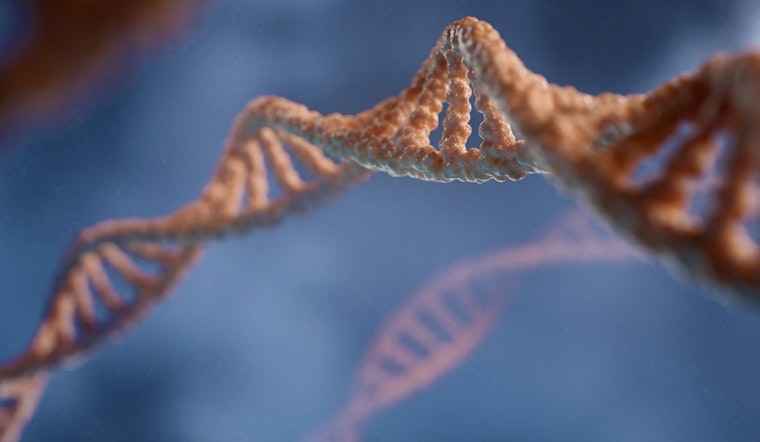
From a lab bench in Chicago to a global consortium effort, scientists have drawn the most detailed four-dimensional maps yet of the human genome, tracking how chromosomes fold, loop and shift around over time in individual cells. The project cataloged more than 140,000 chromatin loops for each cell type and built high-resolution 3D models that pinpoint where genes sit relative to the regulatory elements that control them. Researchers say this kind of map could change how labs connect non-coding DNA variants to the genes they affect and might eventually open new therapeutic paths. It is the latest milestone for the 4D Nucleome community, which has been working to move genome science beyond a simple linear readout of A, C, G and T.
Published in Nature by an international consortium
The paper was published last Wednesday in Nature as a coordinated output of the NIH-funded 4D Nucleome Project. According to Northwestern University, Northwestern scientist Feng Yue served as a co-corresponding author, and the maps draw on data from human embryonic stem cells and immortalized fibroblasts. The institutional summary underscored that these maps give researchers a new way to interpret how the physical layout of the genome influences whether genes are turned on or off.
How the team built the models
To get there, investigators pulled together dozens of complementary genomic assays, including Hi-C, Micro-C, DamID, SPRITE, and single-cell Hi-C. They first benchmarked the strengths of each method, then combined the results. Those integrated datasets were fed into an integrative genome-modeling platform that generated ensembles of 1,000 single-cell 3D structures at roughly 200-kilobase resolution, precise enough to compare with imaging-based validation. The study’s methods and benchmarking are outlined in the study record on PubMed.
What they mapped - loops, domains and nuclear neighborhoods
By unifying the results from these multiple assays, the team produced a combined set of about 141,365 loops in H1 embryonic stem cells and roughly 146,140 loops in HFFc6 fibroblasts, complete with detailed annotations of loop anchors and chromosomal domain types. The authors also defined SPIN states that describe how close a given locus sits to nuclear landmarks such as nuclear speckles or the nuclear lamina, then showed how those positions line up with replication timing and gene expression. The catalog of loops and domains, along with the modeling results, is presented in the main paper and supplemental materials in Nature.
Why genome folding matters for disease research
Most disease-associated DNA variants fall in non-coding regions, far from the genes they influence when you look at the sequence in a straight line. With a detailed 3D layout, researchers can start to predict which genes those variants might mis-regulate based on physical proximity in the nucleus. The consortium reports 3D alterations across cancers, including leukemia and some brain tumors, and argues that structural maps can reveal pathogenic mechanisms that a simple sequence analysis would miss. In a statement highlighted by Northwestern University, Feng Yue said the maps provide a framework for predicting which genes are likely to be affected by pathogenic variants, and noted that the team’s next goal is to investigate whether genome structures can be shifted with drugs such as epigenetic inhibitors.
Data, tools and next steps
All of the datasets and interactive models are being released through the 4DN Data Portal and other public repositories so that researchers everywhere can explore loops, SPIN annotations and 3D structures in detail. The group also trained computational models that predict genome folding from DNA sequence alone, an advance that could let scientists screen variants or synthetic sequence changes in silico before moving to bench experiments. The open resources include visualization tools and standardized analysis pipelines intended to help labs plug these maps directly into disease-focused studies.
For genome science, the work marks a significant shift: from treating DNA as a linear code to reading it as a structural language. It also hands researchers practical maps to follow when they hunt for the genes that non-coding variants mis-wire. In the coming months, investigators plan to mine the resource for candidate mechanisms in cancer and developmental disorders and to test whether targeted epigenetic perturbations can reverse harmful folding patterns.





