

























































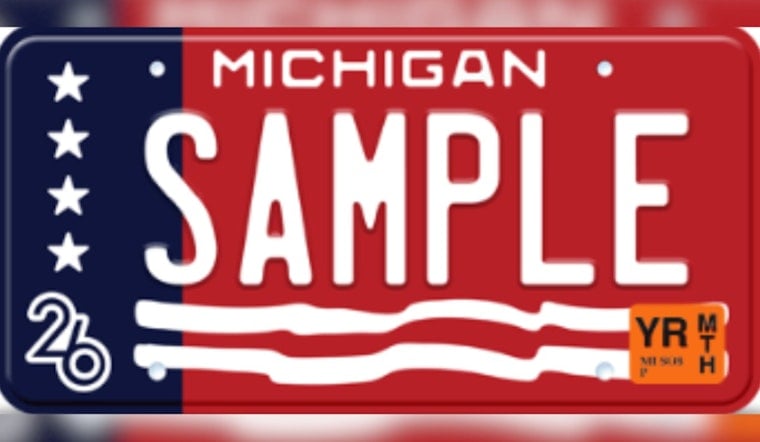
Michigan residents looking to showcase their state pride and patriotism will soon have to mark their calendars, as the state's Secretary of State Jocelyn Benson announced the return of the iconic red, white, and blue license plate. This comes in anticipation of America's 250th birthday in 2026, a milestone that the state is choosing to honor with a blast from the past—a specialty plate design originally released in 1976. According to FOX 2 Detroit, "As we prepare to celebrate our nation’s 250th anniversary, I’m proud to announce Michigan’s iconic red, white and blue license plate will return to our roads in 2026," stated Benson, highlighting the plate's significance in symbolizing the nation's ongoing "fight for freedom, equality, and justice for all."
The modern rendition of the 1976 bicentennial plate, adorned with stars and stripes and carrying a "26" in the corner, has been updated to suit contemporary aesthetics while keeping its nostalgic charm intact. First eligible for purchase on January 2, 2026, the plates will be available through the end of that year, with a one-time fee of $55—a sum that includes a $50 addition to the Michigan Transportation Fund and a $5 plate service fee, as noted by CBS Detroit. In a move to ensure the continued maintenance of Michigan's road infrastructure, officials have urged drivers to consider this uniquely patriotic option, which, will also contribute substantially to state road repairs and construction.
The special edition plate joins two other legacy plates in Michigan's historical series. This includes the blue-on-white Great Lakes plate and the black-on-white Great Lakes State plate, both re-released to popular demand and presently available to motorists. Information on ordering these plates can be found via Michigan's official channels, and as Manistee News reports, these can be acquired at select Secretary of State offices, through the Michigan Secretary of State's website, or at vehicle dealerships.
As Michiganders gear up to celebrate the semiquincentennial anniversary of the U.S., a nod to history through something as everyday as a license plate can make for a collective expression of state and national identity. The decision to reinstate such a notable plate aims not just to highlight the orchestrated government initiative but to let citizens to proudly display, in vivid colors upon their bumpers, their reverence for the American saga. Come 2026, the roads in Michigan are poised to become streams of red, white, and blue, signaling a state-wide participation in the foreseen year of patriotic reflection and festivity.




