

























































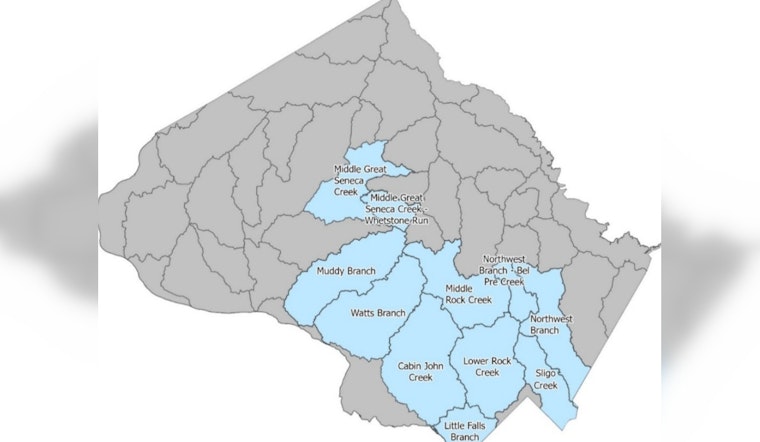
Residents in Montgomery County now have a new tool to help them navigate through the perils of Mother Nature. County Executive Marc Elrich has unveiled the Flood Risk Explorer, a mapping tool designed to identify flood-prone areas, starting with the Sligo Creek watershed. The initiative, which is part of the Comprehensive Flood Management Plan (CFMP), aims to give locals the foresight needed to safeguard their homes and businesses against the increasing threats of flooding, a consequence largely attributed to the realities of climate change.
"There is no doubt that climate change is causing heavier and prolonged periods of storms that bring severe and even deadly consequences," Elrich was quoted in an announcement on the county's website. This project isn't just a one-off; plans are in place to model 10 additional watersheds over the coming years. But as it stands, Sligo Creek is the focus, with this tool marking just the beginning of a much larger scheme to address the flood risks that lie ahead.
Comprehending one's own risk is the first step to prevention. The Flood Risk Explorer can aid residents in understanding the relative risk of flooding in their locales, from their living rooms to their daily commutes. And the county isn't leaving its citizens in the dark on how to respond, either. Among the list of recommendations: be weather aware, consider flood insurance, and sign up for Alert Montgomery for real-time updates during crisis situations.
Moreover, the county isn't solely relying on its citizens to keep safe. A suite of measures, including the installation of 40 flood sensors across high-risk zones, assists in preemptive actions against flooding. Yet, since many flooded roads lack sensors, the county's advice remains stern and straightforward: "Turn around, don’t drown." Never drive through flooded roads – an assertion backed by the sobering statistics from FEMA, noting that flooding isn't just a coastal issue. A staggering 25% of the flood insurance claims hail from areas considered to be at moderate-to-low risk, just like Montgomery County. It only takes an inch of floodwater to potentially cause up to $25,000 in damage.





