

























































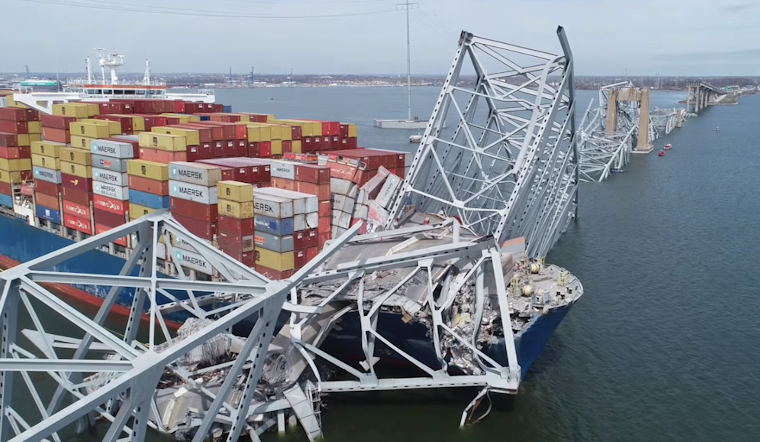
More than a year and a half after the chilling incident where the Francis Scott Key Bridge met its demise, the National Transportation Safety Board has, at long last, shared its conclusive insights on the unfortunate collapse. An extensive investigation revealed that a devastating cargo ship collision with the bridge was due to an unexpected loss of electrical power. This power outage, as reported by WMAR2 News, was traced back to a severe maintenance oversight involving a loose signal wire connection poorly secured by inadequate wire-label banding.
It was determined, not without considerable effort, that at the heart of this calamity was an innocuous, thick, white label. The label, as CBS News Baltimore reported, was responsible for obscuring a loose wire's connection, a mishap sufficient to leave the Dali cargo ship helplessly adrift and set it to tragically impact the structure. "It just didn't fit, so it became disconnected. It backed out," elaborated NTSB Chair Jennifer Homendy, highlighting the minute detail that set off a chain of catastrophic events.
In the collapse's wake, we bear a sobering reminder of the six highway workers who succumbed amidst the disaster—a stark figure reminding us of the fragility of life against the backdrop of human error. The NTSB report further criticized the inadequate measures in place for emergency communication, which might have served to prevent the casualties by enabling workers to evacuate the bridge in time.
The financial and temporal cost of this oversight is equally staggering, as reported by CBS News Baltimore. The Maryland Transportation Authority has now estimated the construction costs for the new Key Bridge to range between $4.3 billion and $5.2 billion, with completion pushed back to as late as 2030, as opposed to an earlier forecast of approximately $2 billion and a hoped-for completion by fall of 2028.
The final NTSB report bravely offered 25 new findings and directly led to several fresh recommendations for various agencies and companies.




.jpg)