

























































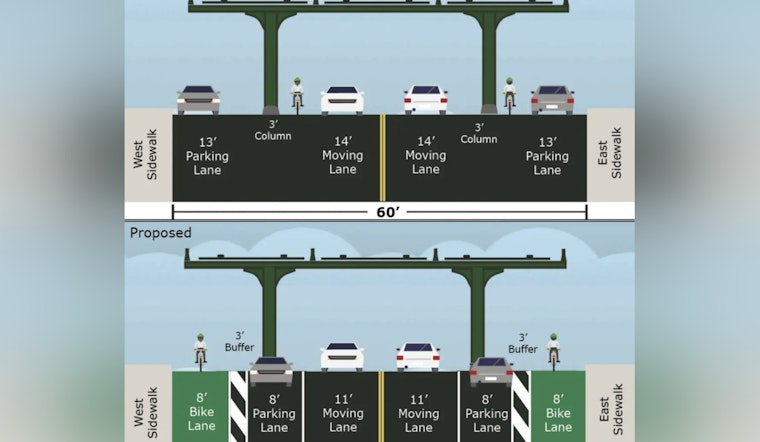
In an unexpected turn of events for New York City’s urban planning, a judge in Queens has ordered the removal of a partially installed bike lane along 31st Street in Astoria. The city's efforts to push forward with the cycling safety initiative were brought to a halt when Judge Cheree Buggs ruled against the Department of Transportation's (DOT) project. Citing city figures, between 2019 and 2024, this specific corridor was identified as being among the top 10 percent most dangerous roads in Queens, with 14 severe injuries or deaths and 139 total traffic injuries.
Judge Buggs' decision to have the lanes removed came after local businesses and St. Demetrios School sued the city. They argued that the project was not only rushed but also failed to properly consider the safety of cyclists and pedestrians, including children from the nearby school. In the suit, they contended the bike lanes would "increase the likelihood of injuries," a position at odds with city data and abundant research suggesting that protected bike lanes typically result to do the exact opposite. Meanwhile, the DOT had said the project was part of their Vision Zero program to reduce traffic fatalities. However, the judge found that the DOT "did not meaningfully reconcile its plan" with the FDNY's safety concerns about access in case of emergencies, as detailed in a Gothamist article.
This ruling marks a rare legal defeat for the city, which usually sees such opposition to street redesign dismissed by the courts. State law grants municipalities broad discretion over the layout of roads, and decisions tend to favor the city's judgment. Previous cases, highlighted by Streetsblog NYC, have allowed various interventions by the city—including the implementation of a bike lane project in Long Island City and the establishment of the 14th Street busway— underlining the city's authority in these matters.
Despite the judge's ruling, the legal battles over city infrastructure, especially regarding bike and bus lanes, continue to shape the dialogue around urban planning. While the city's Law Department has not immediately provided a comment, they are "evaluating next steps" according to Nicholas Paolucci, a spokesperson for the department. The final outcome of this ruling may not only influence the landscape of 31st Street itself but also set a precedent that could affect future developments in the city's transportation infrastructure, as per Streetsblog NYC.



