

























































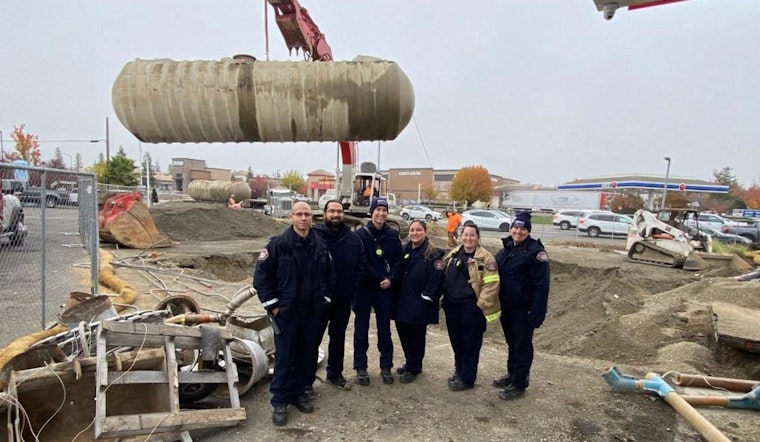
Roseville has officially pulled its last single-wall underground storage tank out of the ground, city fire officials announced this week, wrapping up a long-running cleanup of aging fuel infrastructure before the state’s clock runs out. With that final excavation, every regulated site in the city is now in line with California’s December 31 deadline to phase out single-walled tanks.
Inspectors say the move cuts the odds that those older systems could quietly leak fuel into soil and groundwater. City crews teamed up with local CUPA staff to handle permitting, excavation, and sampling to close out the tank for good.
Roseville Fire Department Oversaw Final Excavation
In a Facebook update, the Roseville Fire Department said its Fire & Life Safety Division CUPA inspectors supervised removal of the city’s last single-wall underground storage tank and confirmed that every site in Roseville now meets the state’s phase-out deadline. The post also pointed out that older single-wall tanks carry a higher risk of leaks that can contaminate soil and groundwater.
What California Requires
The State Water Resources Control Board requires owners to permanently close single-walled underground storage tank systems on or before December 31, 2025. Systems that do not meet code requirements will not be allowed to operate starting January 1, 2026. The board warns that owners who stay out of compliance could face enforcement actions, including red tags that halt fuel deliveries and potential civil penalties.
City CUPA Role and Daily Oversight
The Roseville Fire Department’s Fire & Life Safety Division acts as the city’s Certified Unified Program Agency, handling permits, testing and leak-prevention requirements for underground tanks, according to the City of Roseville. With the last single-wall tank gone, local inspectors will keep up routine oversight of tank sites and manage any post-closure sampling or cleanup that might be needed.
Funding and Cleanup Options
If a leak is discovered during tank removal, owners may have to undertake corrective action and can seek reimbursement or support through the state’s UST Cleanup Fund or the Replacing, Removing, or Upgrading Underground Storage Tanks (RUST) program, the State Water Resources Control Board notes. The board also cautions that deadlines apply for cleanup-fund claims and other filings, so property owners are urged to coordinate with their CUPA and review the state program pages for specific timelines and application details.
For Roseville residents, the milestone closes the book on the city’s single-wall tank era and removes a potential source of soil and groundwater contamination. State and local officials say the work brings Roseville into step with the statewide phase-out and lets regulators concentrate on any remaining noncompliant systems elsewhere in California.





