

























































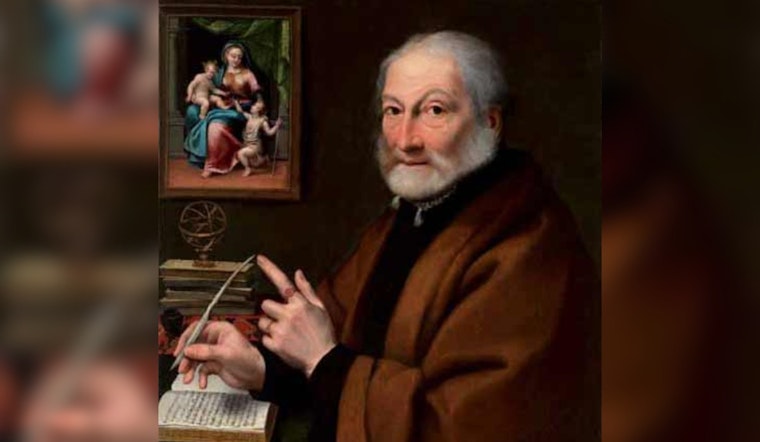
Balboa Park’s Timken Museum of Art has slipped a heavyweight into its galleries: Poetic Portraits: Allegory & Identity in Sixteenth-Century Europe, a compact show that punches well above its size and revolves around a Sofonisba Anguissola painting on loan from Madrid. On view through March 29, 2026, the exhibition gathers more than a dozen paintings and prints that probe how gestures, books and assorted props once telegraphed a sitter’s intellect and moral fiber. For San Diego visitors, the loan shifts how the Timken’s Putnam collection reads and delivers a rare U.S. appearance by one of the Renaissance’s best-known women artists.
According to the Timken Museum of Art, the exhibition opened this fall and centers on Anguissola’s Portrait of Giovanni Battista Caselli, painted in the late 1550s. The museum notes that the Prado loan is shown alongside select works from the Timken’s holdings and the University of San Diego’s print collection, and that the project comes with a scholarly catalogue and a slate of public programs. Timken staff describe the exhibition as an invitation to see their Italian portrait galleries with fresh eyes.
Prado portrait and provenance
The painting is listed by the Museo Nacional del Prado as Giovanni Battista Caselli, Poet from Cremona (1557–58), and the Prado’s catalogue entry tracks its journey through Milan and Spain before it entered the Madrid collection. Conservation work at the Prado reversed earlier overpainting and a mistaken identification, restoring the sitter’s scholarly attire and clarifying who Caselli was and how the portrait functioned in a sixteenth-century gallery of learned men. That research laid the groundwork for the Prado to lend the painting for its U.S. debut at the Timken.
How the loan swap came together
The Timken secured the Prado loan through a reciprocal trade: the museum sent its Paolo Veronese painting to Madrid for the Prado’s recent Veronese monographic show and, in return, arranged to borrow Anguissola’s portrait, as reported by Artnet News. Curators say the exchange gave a small, tightly focused collection a strategic way to host a masterpiece that would otherwise be out of reach and to hang it alongside Timken favorites for direct comparison. The setup underscores the behind-the-scenes give and take that fuels high-profile museum loans.
What to look for
Visitors are encouraged to slow down and read the symbolic cues. Caselli’s books, instruments and hand gestures all point to a life steeped in scholarship and devotion, while other sitters appear crowned with laurel, grasp arrows or pose with attributes that link them to poetic or moral virtues. Derrick Cartwright, the Timken’s director of curatorial affairs, told Artnet News, “The chance to reconsider our paintings by Giovanni Antonio Boltraffio and Bartolomeo Veneto in light of Sofonisba’s achievements was too good to pass up.” The accompanying talks and catalogue are designed to unpack these layers for casual viewers and specialists alike.
Visitor information
Per the Timken Museum of Art, Poetic Portraits runs through March 29, 2026. The museum is open Wednesday through Sunday from 10 a.m. to 5 p.m., and admission is free. Details on program registration and the exhibition catalogue are available on the museum’s website, and visitors can call the Timken for additional information. The show offers a tight, approachable tour of sixteenth-century portraiture that rewards anyone willing to take a closer look.





