

























































State education officials are turning up the heat on Instituto Health Sciences Career Academy in Little Village, saying the charter high school repeatedly failed to fix special education violations and left more than 100 students without services they were legally owed.
The Illinois State Board of Education has escalated a yearslong investigation into the school after finding continuing problems even as Chicago Public Schools voted in May to renew Instituto’s charter while the probe was still open. Investigators estimate students collectively missed tens of thousands of minutes of special education instruction, and some are still owed compensatory services from previous school years. The state has now ordered tighter CPS oversight while it presses Instituto to prove that past violations have actually been corrected.
What the state letter says
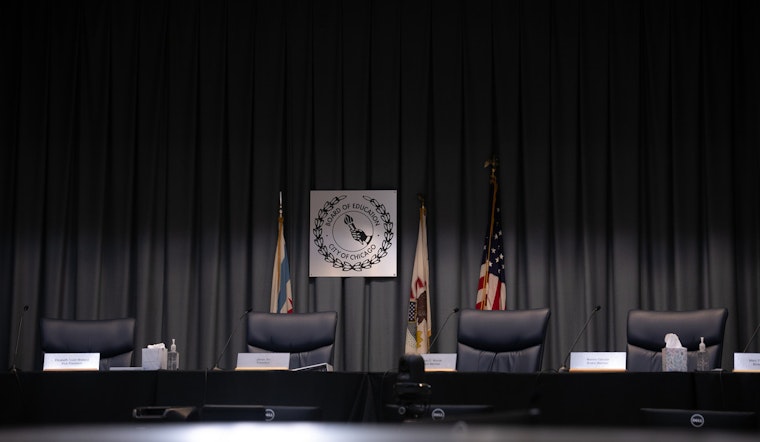
According to Chalkbeat, a letter read aloud at a recent Chicago Board of Education meeting said the Illinois State Board of Education found a “repeated and unresolved failure to correct documented special education violations” across multiple years at Instituto.
The letter, as described by Chalkbeat, estimated that more than 100 students did not receive legally required services last school year alone, with state officials calculating the loss at somewhere between 12,000 and 80,000 minutes of instruction. The agency also said the school has not documented fixes for five of ten alleged violations.
In response, the state directed CPS to tighten its grip on oversight. That includes biweekly check ins with the school, monitoring how paraprofessionals are being used to support students, and monthly district visits to verify that students are finally getting compensatory services they missed in earlier years.
Teachers and staffing troubles
Inside the school, teachers and union leaders have been sounding alarms about special education gaps for some time. Chicago Teachers Union backed educators at Instituto staged a strike in February 2024, saying special education staffing had essentially collapsed.
Local coverage of the teachers' strike for special ed and immigrant protections reported that a mass departure of special education staff shortly before the 2023-24 school year deepened service gaps for students. Union notices and local reporting said negotiations later led to tentative agreements aimed at boosting special education supports at Instituto campuses.
Principal: rebuilding the program
By the time the state’s latest findings surfaced, Instituto had new leadership trying to dig out from those problems. Principal Alberto Mendez, who took over during the 2024-25 school year, told reporters that the school has hired additional staff and begun offering compensatory services both during the school day and after school.
“When I first stepped in, it was almost like I inherited the systemic issues,” Mendez said, according to Chalkbeat. School leaders say those efforts are still in progress and that fully restoring services will take time.
What families can do and next steps
Parents who believe their child’s special education rights have been violated do not have to wait for the state’s broader investigation to wrap up. They can file a written complaint directly with the Illinois State Board of Education. ISBE typically investigates these complaints within 60 days and can order remedies if it confirms violations.
ISBE’s guidance walks families through the complaint form, timelines, and what documentation to submit, and it is available in multiple languages. In the meantime, CPS is required to keep a closer watch on Instituto while the state seeks proof that alleged violations have been corrected and that students receive any compensatory services they are owed.
Why this matters
Advocates warn that when special education services fall through for months or years, the impact on students’ academics, behavior, and social development can linger long after the paperwork gets fixed. The state’s decision to escalate its probe underscores those concerns for families in Little Village and across the district.
For now, parents, community advocates, and teachers are left watching to see whether tighter district oversight actually translates into restored services and meaningful catch-up time for the students who lost instruction.




