

























































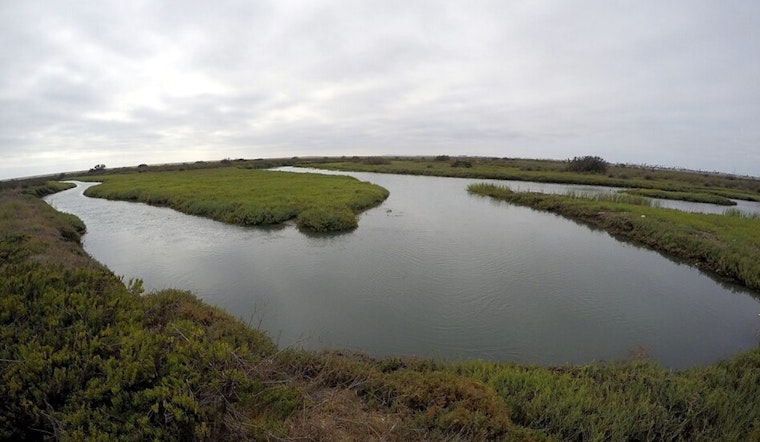
The stench rolling across the Tijuana River valley and into South Bay neighborhoods is no mystery to locals. A broken sewer line in Mexico sent an estimated 120,000 gallons of raw sewage surging toward Imperial Beach, leaving residents and park visitors breathing foul air while crews scrambled to corral the mess with earthen berms and vacuum trucks near Monument Road. It is the latest chapter in a years-long saga of cross-border sewage flows that have shut down beaches and worn down communities in Imperial Beach and the estuary.
Containment and immediate response
Officials with the U.S. International Boundary and Water Commission said crews were already working on upgrades at the Hollister and Goat Canyon pump stations when a line in Mexico ruptured, pushing raw discharge through two earthen berms and toward Monument Road. Workers piled up additional berms and deployed vacuum trucks to suck up as much material as possible, and the agency said the damaged sewer line was now contained, with trucks staying in place until flows are fully under control. The office blamed recent rain for the failure.
Federal fixes are under way but won't erase spills overnight
The U.S. section of the IBWC has launched a phased rehabilitation and expansion of the South Bay International Wastewater Treatment Plant, a program expected to cost roughly $600 million that kicked off with a $42.4 million design-build contract, as reported by Engineering News-Record. Federal agencies have also moved to fast-track an interim upgrade to boost treatment capacity to 35 million gallons per day, a step officials said could be completed in about 100 days to soften the blow of rainy-season flows, according to KPBS. Engineers and community leaders caution that the full expansion, along with parallel repairs in Mexico, will take years, and that these interim upgrades will not prevent every failure in the near term.
Residents say promises have worn thin
Neighbors along the estuary say they are long past tired of temporary fixes and foul smells. "They basically flourish because the sewage water is high in fertilizer," said Leon Benham, who has lived by the Tijuana River for more than 60 years. He also told reporters that the contamination has dragged down home values in his neighborhood and that this latest spill only reinforces his belief that short-term patches are no substitute for a real, lasting solution.
Air risks and closed parks underline the stakes
Researchers say the problem does not stop at the waterline. A peer-reviewed study led by Scripps Institution of Oceanography measured hydrogen sulfide spikes in the Tijuana River valley that far exceeded California air quality standards and identified dozens of other gases linked to sewage, according to Scripps Institution of Oceanography. That science helps explain why Border Field State Park still lists its Monument Road access as closed, warning that roads and trails may be flooded with sewage-contaminated water and mud, per the park's status page at Tijuana Estuary. County and state agencies have increased monitoring and are distributing air purifiers as a short-term health measure, but officials say only sustained binational infrastructure work will get South Bay residents out of this cycle of recurring spills.





