

























































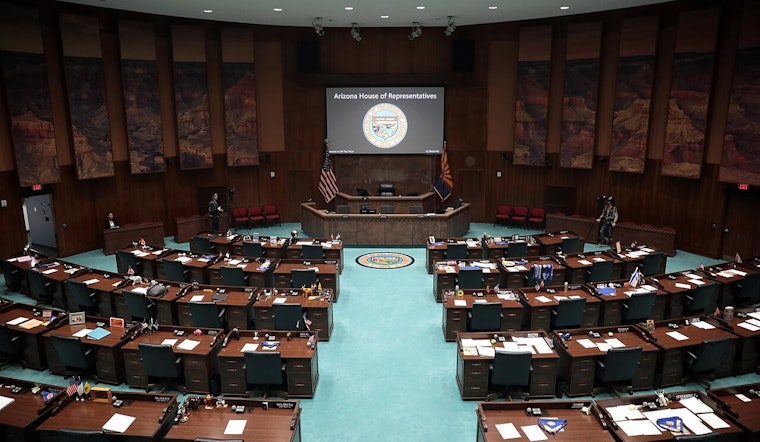
In the chambers of the Arizona House of Representatives, a new resolution stands firm, carrying historical gravitas and stirring political waters. Representative David Livingston, who chairs the House Appropriations Committee, presented HR 2002, officially termed the Judea & Samaria Act. This act not only insists on the historical and biblical claims of Israel over Judea and Samaria but also calls for the Arizona state documents to refer to these territories using these names, rather than the more commonly known "West Bank."
The resolution, according to information provided by the Arizona State Legislature, cites "the biblical, historical, and legal ties of the Jewish people to Judea and Samaria," and challenges the usage of the term "West Bank," which, the document implies, erases such ties. Representative Livingston’s advocacy took on a more personal note post his visit to Israel last November with the National Association of Christian Lawmakers, where he said, "Judea and Samaria are not abstractions. They are the center of Jewish history, faith, and national identity," drawing a line in the sand over deep-rooted convictions.
Livingston's resolution does not stand in isolation but nests within a continuum of international debates concerning territory, sovereignty, and historical narrative. HR 2002 pushes back against the naming practices that occurred during Jordan’s control of the area from 1948 to 1967, calling them "illegal occupation." The language employed here by the representative is not just about terms— it is a chess move in the larger, more complex game of geopolitical acknowledgment and alignment.
The narrative woven by the Judea & Samaria Act is twofold; it addresses an assurance of historical ties while simultaneously invoking strategic defense arguments. It suggests that the United States has an interest in ensuring Israel's sovereignty over these regions to prevent the possible rise of terrorism. It subtly links the well-being of Western civilization and the American ethos to the historical narrative and security concerns of Israel. "Language matters. When governments adopt terminology meant to sever Jewish ties to the land, they choose politics over truth,” Livingston commented, thus implying that the resolution serves as a bridge over troubled political waters.
The bill's ramifications, should it be implemented, extend beyond the immediate legislative environment. Arizona's official adoption of these terms would signify a substantial symbol of support for Israel from a U.S. state, marking a departure from common international diplomatic parlance. David Livingston brings to the table not just a legislative proposal, but an intention to etch history, as he sees it, into the official language of his state.





