

























































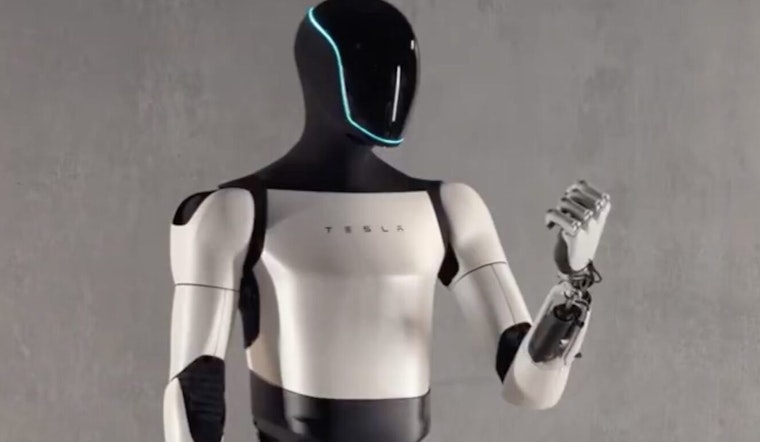
Tesla's Fremont factory is undergoing a dramatic transformation that signals the company's shift from electric vehicles to humanoid robotics—though the move comes amid declining car sales and questions about whether the pivot represents innovation or desperation.
The electric automaker will end production of its Model S and Model X vehicles next quarter, according to CNBC. CEO Elon Musk announced during the company's fourth-quarter earnings call that the factory space will be retooled to manufacture up to one million Optimus humanoid robots annually. "It's time to basically bring the Model S and X programs to an end with an honorable discharge," Musk said on the call, adding that anyone interested in purchasing these models should order soon.
A Factory's Evolution
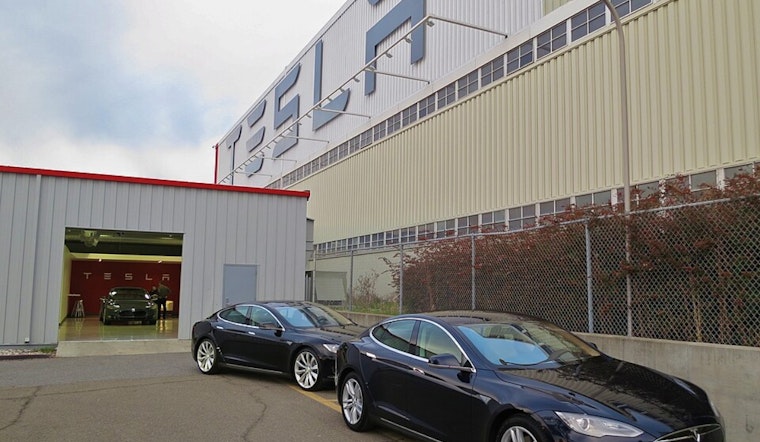
The decision affects the iconic factory at 45500 Fremont Boulevard, which currently employs over 20,000 people according to Wikipedia. The facility will continue producing Model 3 and Model Y vehicles, which represented 97% of Tesla's 1.59 million deliveries last year, CNBC reported. But the space currently dedicated to the luxury sedan and SUV will be completely repurposed for robotics manufacturing.
City officials moved quickly to clarify misconceptions about the transition. "To be clear, Tesla is not ending vehicle production at its Fremont factory and reports suggesting otherwise are inaccurate," Fremont Mayor Raj Salwan said in a statement released Tuesday evening. The city emphasized that Tesla expects to maintain current vehicle throughput through production line improvements and operational efficiencies, keeping Fremont as Tesla's highest-output vehicle factory in North America.
The Numbers Behind the Pivot
The timing of Tesla's robotics bet is notable, coming on the heels of the company's worst financial performance in years. Tesla's net income plunged 46% in 2025, falling to just $3.79 billion—a fraction of its $12.6 billion peak earnings in 2022, according to NPR. The company also lost its crown as the world's top EV seller to Chinese automaker BYD, which sold more than 2.25 million battery-powered vehicles in 2025 compared to Tesla's 1.65 million.
Model S and Model X sales have been particularly dismal. In 2025, Tesla sold only 5,889 Model S units—a 52.6% decline from 2024—and 13,066 Model X vehicles, down 34.2% year-over-year, as reported by GagAdget. Combined, the two models accounted for roughly 3% of total sales, making them prime candidates for discontinuation in a struggling market.
The company's broader challenges extend beyond sales figures. Tesla's brand reputation has taken a hit, with NPR reporting that 37% of Americans now have a negative view of the company compared to just 27% with a positive view. Even among existing Tesla owners, brand loyalty has eroded—while 98% of Tesla owners who bought another EV chose Tesla again in 2020, that number dropped to 78% in 2025.
The Robot Gamble
Tesla plans to unveil the third generation of Optimus "in a few months," with Musk promising a "general purpose robot that can learn by observing human behavior," according to KRON4. The ambitious goal is to produce one million robots annually on the same floor space that currently manufactures 100,000 electric vehicles, Electrive noted.
But the transition won't be smooth. Musk acknowledged on the earnings call that ramping up Optimus production will be "agonizingly slow" initially because "there's really nothing from the existing supply chain that exists in Optimus," as WebProNews reported. The company is essentially building an entirely new manufacturing ecosystem from scratch—a daunting prospect for a company already struggling with its core business.
Jobs and the Local Impact
One silver lining for Fremont: Tesla states the retooling will not result in job losses. In fact, Mayor Salwan's statement emphasized that "Fremont headcount may increase" as robot production scales up. Musk said during the earnings call that he expects to "significantly increase output" and boost headcount at the facility, bucking the tech industry's recent layoff trends.
The promise of more jobs stands in contrast to Tesla's recent history in the Bay Area. The company eliminated 3,354 jobs across Fremont and Palo Alto locations in 2024, Silicon Valley Business Journal reported, raising questions about whether Tesla's employment commitments will materialize.
"Fremont was selected as Tesla's Optimus hub due to the city's proven ability to support large-scale, complex manufacturing operations, its highly skilled workforce, and a business-friendly and responsive city administration," the city's statement noted, emphasizing the region's manufacturing strengths. The former NUMMI plant has been a manufacturing site since 1984, employing thousands through various iterations before Tesla's 2010 acquisition.
A Risky Reinvention
The factory transformation represents Tesla's latest attempt to redefine itself as what it calls a "physical AI" company rather than just an automaker. Yet skepticism abounds about whether humanoid robots represent genuine innovation or merely a distraction from declining EV sales and intensifying competition from Chinese manufacturers.
For Model S and Model X owners, Tesla promises continued service and support, though the vehicles' production run of 13 and 11 years respectively is coming to an end. Musk's parting advice to potential buyers? "Now would be the time to order it."
Whether Tesla's bet on humanoid robots pays off remains to be seen. What's certain is that Fremont's iconic factory—once the site of GM-Toyota joint ventures producing hundreds of thousands of conventional vehicles—is embarking on its most radical transformation yet.





