

























































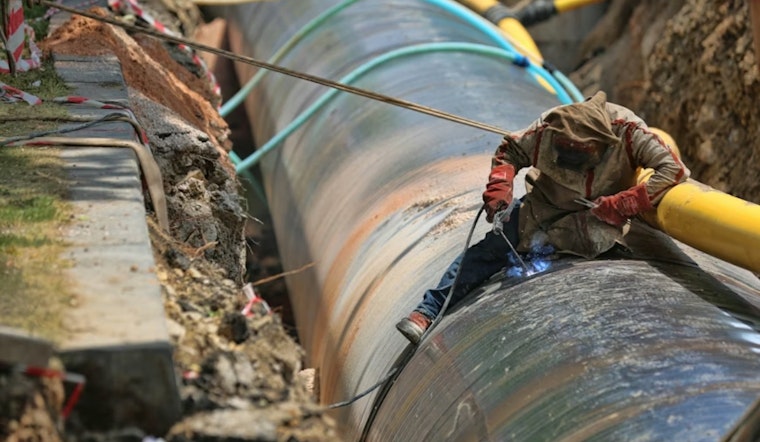
Air monitors picked up methane and elevated benzene levels near a school bus stop north of Fort Lupton, leading state investigators to a natural gas pipeline leak on Weld County Road 20, less than a mile east of U.S. 85. The pipeline operator has shut in and depressurized the affected section while crews map the plume and run detailed air tests. State agencies say monitoring will continue as repairs move forward, and local school and public-health officials have been notified, with investigators sharing updates with the Weld Re-8 school district.
How Investigators Tracked the Leak
In a statement last Monday, the Colorado Department of Public Health and Environment said crews used drone mapping, optical gas imaging, and remote methane-detection technology to track the plume, pinpoint the leaking segment, and identify the source. Once the leak location was confirmed, the operator shut in the line so technicians could depressurize that section and begin repair work, according to The Denver Post.
Health Risks and Short-Term Exposure
Air-quality tests at the site detected benzene, a component of fossil gas that public-health experts say can be harmful even with short-term exposure, depending on the concentration. The Centers for Disease Control and Prevention warns that breathing high levels of benzene can cause dizziness, headaches, tremors, and confusion, and, at very high exposures, loss of consciousness. Officials have told residents and school staff to report any symptoms and to follow guidance from local health authorities while monitoring continues.
Why Fort Lupton Is Watched Closely
Fort Lupton and the surrounding Weld County oil-and-gas fields have seen previous large methane releases, and researchers say those so-called super-emitter events often carry toxic co-pollutants like benzene that can drift into neighborhoods. An analysis by Inside Climate News found that modeled benzene concentrations from earlier Fort Lupton events exceeded safety benchmarks and reached residential areas. That track record helps explain why state teams moved quickly with specialized detection tools this week.
What Officials and Schools Are Doing Now
State investigators say they will continue targeted monitoring at the site and share results with Weld Re-8, which oversees Fort Lupton Middle and Fort Lupton High School, while the operator investigates the cause and completes repairs. The oil-and-gas company has told regulators it will determine what caused the leak and fix the pipeline before restoring full service, according to reporting by The Denver Post. Parents and residents have been urged to alert authorities if they experience symptoms that could be consistent with benzene exposure.
Regulatory and Public-Health Follow-Up
State agencies, including public-health and environmental teams, are coordinating monitoring and the technical response, and any enforcement or corrective orders would come through the appropriate Colorado regulators as the investigation proceeds. For now, officials are emphasizing continued air monitoring and transparent data-sharing with residents to assess any ongoing risks and to guide next steps. Investigators say they plan to publish updates as testing continues and pipeline repairs are completed.





