

























































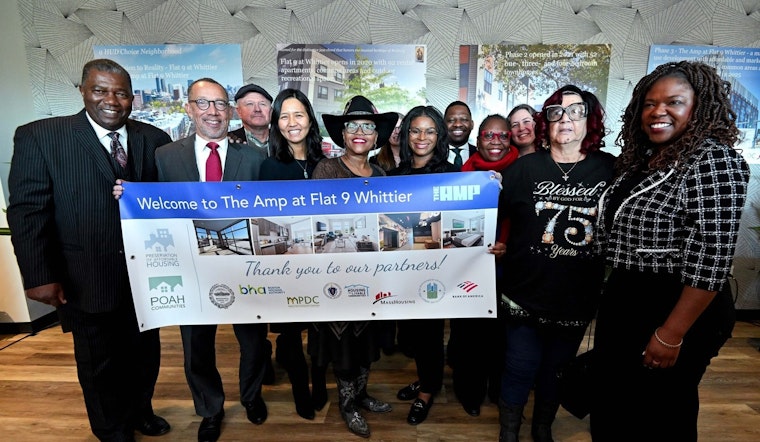
The City of Boston recently held a celebration to mark the completion of The Amp, the final phase in the redevelopment of Flat 9 at Whittier. Mayor Michelle Wu, Congresswoman Ayanna Pressley, and representatives from the Boston Housing Authority (BHA), along with Preservation of Affordable Housing (POAH), were among those in attendance to recognize the transformation of Roxbury's Whittier Street Apartments, a project supported by a $30 million HUD Choice Neighborhoods Initiative grant awarded back in 2016.
Mayor Wu expressed pride in the redevelopment, stating, "Whittier has long been a foundation for Roxbury families." According to a statement made by the City of Boston, she added that the project is "transformational for the city, bringing even more affordable housing and deeper connections to the neighborhood." The sentiment was echoed by State Senator Liz Miranda, who highlighted the significance of the investment in the community, reflecting "a promise to Roxbury families that they deserve safe, dignified housing and vibrant community spaces."
Flat 9 at Whittier has been revitalized over multiple years, replacing the original 200 public housing units with 210 deeply-affordable homes and adding an additional 262 mixed-income rental units. This brings in the total to 472 units of housing. The Amp, a 12-story mixed-income residential building, completed in September 2025, contributes 172 apartment homes to this count and includes community spaces and commercial areas designed to serve local businesses and residents. Kenzie Bok, Boston Housing Authority Administrator, mentioned the achievement of welcoming our Whittier families home and celebrated the new housing opportunities brought to the Roxbury neighborhood.
Throughout all three phases of the development, partnerships between POAH, the Boston Housing Authority and Madison Park Development Corporation have resulted in a mix of affordable and market-rate housing. The HUD Choice Neighborhood initiative also provided help beyond bricks and mortar, aiding residents in achieving personal and financial milestones. In a statement shared by the Boston government, four Whittier families were reported to have bought homes with support from the BHA and the City of Boston, further magnifying the project's impact.
Funding for the project came from various sources, with the City of Boston investing $8.8 million, which included infrastructure ventures and significant neighborhood investments. The State Executive Office of Housing and Livable Communities also contributed more than $24 million in direct subsidy, alongside state and federal Low Income Housing Tax Credits. Engagement with residents and community stakeholders was central to the redevelopment planning process, incorporating their priorities into the final design, emphasizing open space, public art, bike infrastructure, and transit access.





