

























































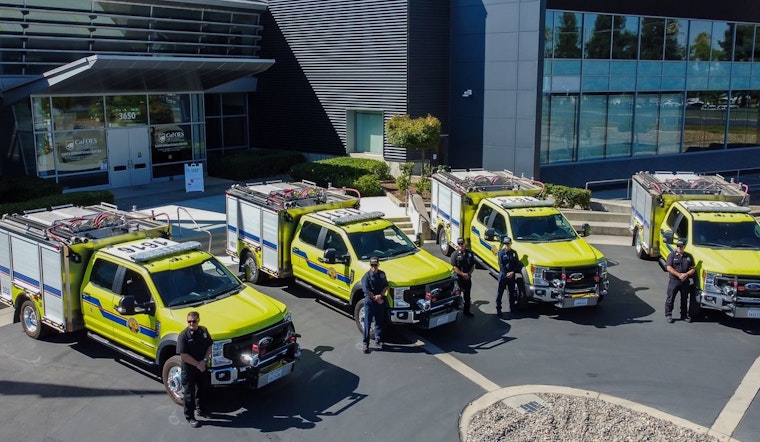
In the face of wildfire threats that have become all too familiar in the Golden State, California has aggressively ramped up its firefighting arsenal and prevention strategies. Marking one year since the LA fires, the state has mobilized a significant array of resources, as Governor Gavin Newsom pushes forward with rapid response measures. Among these efforts, additional Type-6 fire engines, which are notably nimble and maneuverable, have been assigned to Los Angeles, increasing the city's ability to tackle fires in challenging terrains, reported the Governor's office.
Expanding beyond traditional measures, California's firefighting strategy now includes high-tech LiDAR mapping, the fruits of a collaboration with organizations such as NASA Ames Research Center and the California Air Resources Board. This cutting-edge tool generates high-resolution 3D data to map out the landscape, pinpointing areas with accumulated vegetation and potential fuel for wildfires. The updated CAL FIRE budget, nearly doubling since 2019 from $2 billion to $3.8 billion, ensures that the state is now backed by, not only enhanced firefighting units but also a record number of trained personnel ready to respond to wildfire emergencies.
The aerial firefighting fleet has seen a significant upgrade, now described as the world's largest, with the addition of a third C-130H airtanker. This expansion escalates California's capabilities for fire suppression from above, enabling the delivery of large amounts of fire retardant to protect both communities and natural landscapes. Joining an impressive lineup of helicopters and other aircraft, these C-130H airtankers stand ready to bolster CAL FIRE’s efforts "to protect communities and natural resources," according to the state's announcement.
Addressing the distinct landscape and fire risks of Southern California, state authorities and local experts have zeroed in on tailored wildfire prevention strategies. With an aim to reduce human-caused ignitions, which account for nearly 95% of wildfires in the region, efforts have included landscaping along roadways by Caltrans and oversight of electrical infrastructure to minimize risks. Furthermore, grants nearing $63 million push forward wildfire prevention initiatives, spanning from fuel breaks to community defense education. Among the noteworthy investments, CAL FIRE granted nearly $62.7M to support 84 projects across California, "delivering results on the ground," as Governor Newsom put it.
In the aftermath of the Los Angeles fires, the state has not only focused on expansion and technology integration but also on streamlining processes to deploy projects more efficiently. An emergency proclamation by Governor Newsom led to a fast-tracked permitting process, slashing wait times significantly, permitting wildfire prevention projects in a fraction of the traditional timeline. The Statewide Fuels Reduction Environmental Protection Plan further assures that these expedited projects do not compromise key environmental values. With various initiatives underway—from comprehensive LiDAR mapping to on-the-ground project deployment—California vows to meet the escalating wildfire challenge with readiness and resilience.




