

























































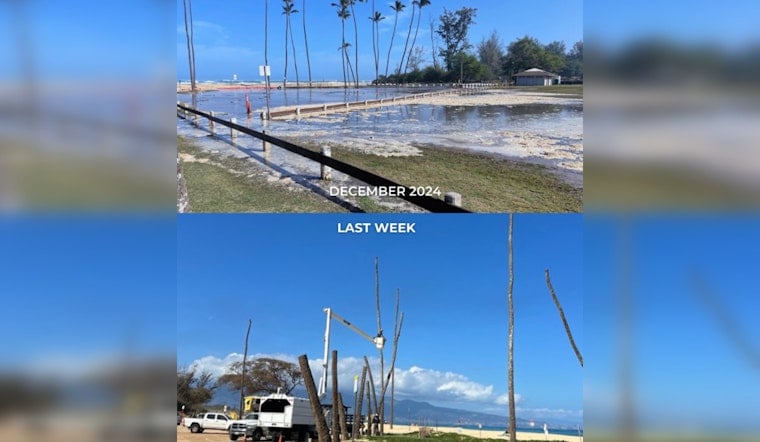
In a move reflecting the bitter reality of climate change, Baldwin Beach Park in Pā‘ia has seen the removal of 18 coconut trees this past week, the casualties of coastal erosion and the relentless encroach of saltwater. These trees used to stand tall along the shoreline, but have succumbed to environmental pressures, as stated by the County of Maui. County arborist Timothy Griffith explained that although coconut trees can tolerate saltwater, they have their limits.
"Coconut trees, unlike mangrove trees, are saltwater tolerant, but not saltwater resistant or impervious," said Griffith. Over time, the incursion of high tides and the effects of coastal erosion, much like what led to the damage and subsequent removal of the Baldwin Beach pavilion, have proved to be too much for these shoreline residents. Griffith added that the 50 coconut trees situated farther inland, remain protected from such devastating impacts. Despite the county's long-standing tree care, this particular issue is "isolated to the shoreline area due to the negative impacts of climate change and salinization," Griffith told Maui County.
These recent tree removals are a stark reminder of the broader environmental battles being faced by coastal communities. Patrick McCall, the DPR Director, emphasized his department's dedication, stating future plans to integrate additional trees to restore what Baldwin Beach Park has lost. "The Department of Parks and Recreation continues dune restoration work at the site to slow erosion and protect park space," McCall said, as noted by Maui County.
In the ongoing struggle against rising sea levels, a phenomenon which has claimed roughly a quarter mile of shoreline over the last century, Baldwin Beach Park represents just one chapter in the narrative of change. According to the DPR Vulnerability and Adaptation Study in 2022, such loss is mirrored in the forces shaping the Lincoln shoreline.





