

























































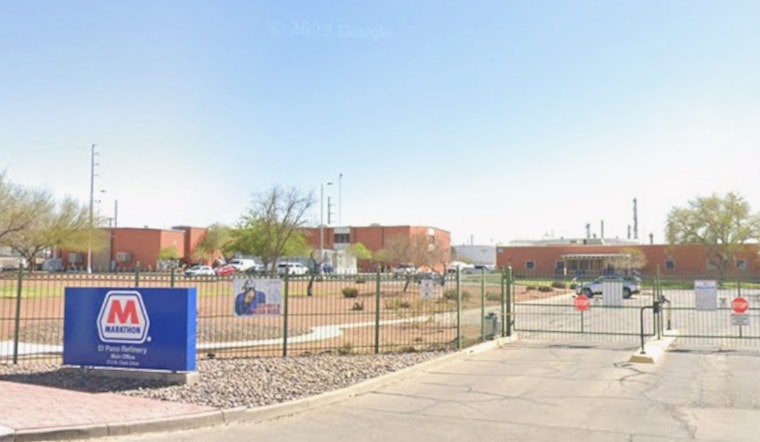
El Paso’s long-running tug-of-war over refinery pollution and paychecks is heading back to the public stage Thursday night, when state regulators take comments on Marathon Petroleum’s request to renew the major air permit for its El Paso refinery. The meeting is set for Jan. 8 at 7 p.m. in the theater at Riverside High School in the Lower Valley and will focus on Air Quality Permit No. 18897. The decision could reshape allowable emissions from the sprawling, decades-old plant south of Interstate 10 and has direct implications for both neighborhood health and refinery jobs.
What The Meeting Is For
The session is part of the agency’s formal public comment process on Marathon’s renewal request, according to the Texas Commission on Environmental Quality. The official notice, filed with the state and posted as a public meeting packet, lists Riverside High School as the site and explains how residents can submit written comments by mail or through TCEQ’s eComment portal. The Texas Register provides the formal instructions and contact information for the permit docket.
What The Permit Covers
The renewal would govern emissions from the refinery’s processing units and dozens of other pieces of equipment across the site and, if granted, would extend the facility’s major air permit for a 10-year term, according to the public notice. Marathon says the application consolidates prior authorizations and is not intended to add new units or increase the plant’s capacity, and the company’s local materials note roughly 400 full-time employees at the site, according to Marathon Petroleum.
Neighbors Want Tougher Limits
Local reporting and a brief permit summary posted with the application indicated preliminary calculations that allowed emissions of some pollutants, chiefly volatile organic compounds, could rise modestly under the paperwork, a finding that has sharpened public concern. The El Paso Times shows that most formal comments urge tougher limits. Some residents and neighborhood groups have called for the refinery’s closure, while others point to the jobs it supports. Community leaders and neighborhood associations have pushed county officials to contest the renewal and to press for enforceable pollution controls, according to El Paso Matters.
Contested Hearing Would Be A Legal Test
If a person or government files a timely request for a contested case hearing, that request can move the matter from the public comment phase to a trial-style proceeding before an administrative law judge. Only relevant and material air-quality issues raised in the formal comment period may be considered at that stage, according to the Texas Commission on Environmental Quality. County officials and neighborhood advocates have signaled in past renewal fights that they may seek that route to secure enforceable concessions rather than an outright shutdown, reporting shows, according to Inside Climate News.
Why It Matters In El Paso
The El Paso refinery processes a large share of the region’s crude and remains a significant employer. Marathon Petroleum lists about 400 full-time workers at the site and describes the plant’s local role. Federal facility records also identify the refinery as a major source of greenhouse gases and hazardous air pollutants in the Borderland, which is why residents and public-health advocates are following the permit review closely, according to EPA data.
How To Make Your Voice Heard
People who cannot attend the Jan. 8 meeting can submit written comments through the TCEQ eComment portal or by mail to the Office of the Chief Clerk. The agency will prepare a written response to formal comments after the public comment period closes, according to the Texas Register. If a timely contested case request is filed, the agency’s executive director and then the three TCEQ commissioners will consider whether to send the matter to a State Office of Administrative Hearings proceeding, which would determine the narrower legal issues the hearing may address.





