

























































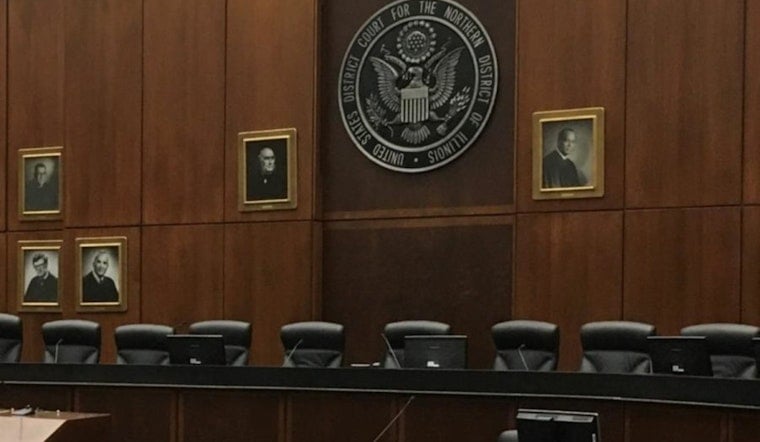
A foreign national, identified as Hector Gomez, is facing federal firearm charges after an indictment alleges he illegally had a loaded handgun in his possession in Chicago last year. According to a press release by the U.S. Attorney’s Office for the Northern District of Illinois, Gomez, previously convicted as a felon and not holding US citizenship or lawful residency, is accused of brandishing the weapon on November 8, 2025. Later the same day, Chicago Police discovered the handgun on Gomez’s lap while he was seated in a vehicle in the Little Village neighborhood.
The indictment also details an incident occurring mere hours before Gomez's encounter with the police, where at least two gunshots were fired from the same weapon in proximity to U.S. Customs and Border Patrol agents actively engaged in their duties during Operation Midway Blitz. Gomez, 45, originally from Mexico, had previously been convicted of a felony and had been deported from the US on four occasions between 2008 and 2015. He remains in federal custody without bond pending his arraignment set for January 12.
Announced by Acting U.S. Attorney Andrew S. Boutros, alongside ATF and FBI special agents-in-charge Christopher Amon and Douglas S. DePodesta, the indictment forms part of a broader strategy under Project Safe Neighborhoods aimed at reducing violent crimes, especially those involving firearms. The coordinated effort includes federal prosecution of illegal firearm possession as a method to curb violence, particularly within the Northern District of Illinois.
While an indictment brings charges, it is not indicative of guilt; Gomez is presumed innocent until proven otherwise. Each count in the indictment carries a possible maximum sentence of ten years in federal prison. However, conviction would require that the Court impose a reasonable sentence guided by federal statutes and advisory U.S. Sentencing Guidelines. Special Assistant U.S. Attorney Jill J. Bhalakia is representing the government in the case.





