

























































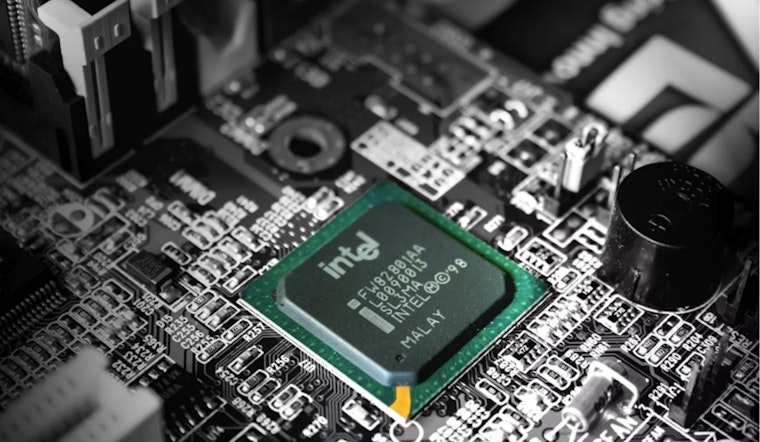
Intel's struggle to keep up with the high demand for data-center chips driven by artificial intelligence has led to newly reported losses, sending shares plummeting before the Friday market opened. Despite factories running at full capacity, supply constraints have hindered the tech giant's efforts to meet market demand, leading to a 12% decline in its stock price in pre-market trading. According to The Wall Street Journal, Intel's fourth quarter closed with a net loss of $333 million, and revenue also took a hit, dropping from $14.3 billion the previous year to $13.7 billion.
Despite the setbacks, investor interest had been rejuvenated by significant investments from entities like the U.S. government, SoftBank, and Nvidia, as well as a surge in demand for traditional server chips used in AI-driven data centers, which had boosted Intel's stock by 84% the previous year. However, the reality of the supply constraints came crashing down when Intel CFO David Zinsner revealed in a statement obtained by Reuters that the lowest supply levels are anticipated in the first quarter of 2026, with improvements expected in the second quarter. Oppenheimer analysts also noted that the supply shortage should begin to recede in the second quarter.
The company's forward-looking stance took a hit when it projected a loss per share of 21 cents for the first quarter of 2026, with revenue forecasts ranging between $11.7 billion and $12.7 billion. The drop in Intel's share price, indicated by pre-market trading, could reduce its market value by about $31 billion. In light of these developments, the pressure on Intel's turnaround plan under CEO Lip-Bu Tan has been magnified, who told The Wall Street Journal that despite disappointment in not being able to fully meet demand, the company is on a multiyear journey and urged patience and resolve.





