

























































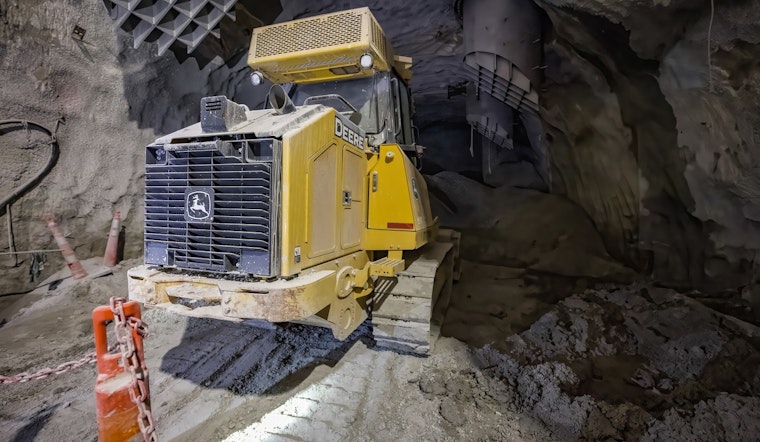
A 2-mile tunnel drilled beneath Lake Travis is set to give Cedar Park, Leander, and Round Rock a much deeper grip on the region’s water supply, part of a $225 million effort to keep taps on even in severe drought. The new system will feed a pump station on Lime Creek Road that is designed to move up to 145 million gallons a day to regional treatment plants. Work started in 2022, and officials still say they expect the intake and tunnels to be online by spring 2027, even as construction has slipped behind schedule. Once up and running, the project will replace floating barge pumps that have a harder time doing their job when lake levels drop.
Tunnel, pipes and pumps
Crews have already finished the bored tunnel, which is roughly 2 miles long with an internal diameter of about 10 feet and sits about 300 feet below the lake surface, and have installed a 78-inch transmission line, according to the Houston Chronicle reporting. The new deep-water intake stretches nearly 9,800 feet farther out into Lake Travis than the existing floating intakes, letting the system pull water from about 121 feet below full pool instead of roughly 60 feet with the barges. From there, officials say the transmission main will carry raw water across the lake to a lift station that pushes supplies to Cedar Park, Leander, and Round Rock.
Engineering under the surface
Project plans describe a 30-foot-diameter, 300-foot-deep wet well that feeds six raise-bored pump shafts, with room to add more pumps later, according to Schnabel Engineering. The Brushy Creek Regional Utility Authority says the system is sized to deliver up to 145 million gallons per day to the partner cities, with the new intake tunnels and transmission lines tying back into existing Phase 1 infrastructure. Designers note that using submersible borehole pumps with a remote pump station cuts maintenance risk when surface water levels fall.
Money and timeline
Round Rock signed off on its share of the work in 2022 as part of a roughly $224.8 million contract, folded into the regional price tag of about $225 million, according to Round Rock. The Texas Water Development Board backed the effort with multi-year financing support, per a TWDB release. Local coverage notes that all underground concrete work is finished, but wrapping up the pump station and related treatment-plant expansions has pushed the schedule into spring 2027, with engineers cautioning the contractor could still be several months behind, according to Community Impact.
Why it matters
Officials keep coming back to one phrase: drought resiliency. Tapping deep water through long tunnels is meant to keep supplies available even when Lake Travis drops. The Lower Colorado River Authority considers the lake full at 681 feet above mean sea level, and history has shown it can sink many feet below that mark in serious droughts, straining local systems. For Round Rock alone, the new intake is expected to add about 40.8 million gallons a day to the city’s available supply, easing demand on other sources, as reported by KUT using LCRA data.
Local leaders' reaction
Cedar Park Mayor Jim Penniman-Morin, who made the trek down to see the tunnel work himself, called the project "quite impressive," according to Houston Chronicle coverage. City managers from Cedar Park, Leander, and Round Rock say that once the deep-water intakes and the new pump station are running, they plan to retire the floating barges and rely on a more drought-resistant setup.
What’s next
On the to-do list: finishing the above-ground pump station on Lime Creek Road and completing the related treatment-plant upgrades. Some phases of the plant expansion are slated to continue through 2028, officials told Community Impact. Once the entire system is commissioned, local leaders say the setup should lock in a stable source of raw water for decades, even as Cedar Park, Leander, and Round Rock keep growing.





