

























































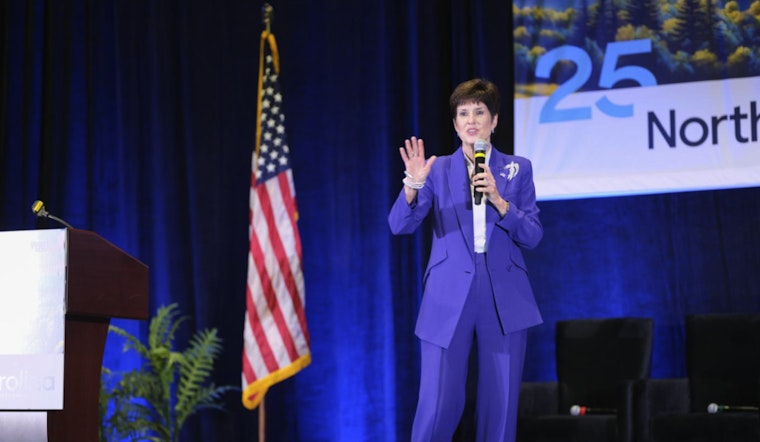
The N.C. Department of Information Technology (NCDIT) under the helm of Secretary Teena Piccione wrapped up 2025 by establishing itself as a leader in tech modernization nationwide, according to a press release by the department. Under Piccione's direction, NCDIT made significant headway in enhancing AI governance, expediting IT procurement, bolstering cybersecurity, and expanding broadband access throughout North Carolina. "Our focus for 2025 was to build stronger foundations in several key areas of the department," Piccione told the NCDIT newsroom, expressing pride in her team's achievements.
Notably, the expansion of AI in state government has been a remarkable success for Piccione's team. North Carolina's AI expertise ranking rose astonishingly from 36th to 7th in the nation. Rankings were based on diverse metrics, including education and tech jobs, with data pulled from respected platforms such as U.S. News & World Report and the Bureau of Labor Statistics. In a move toward increased efficiency, Piccione led an initiative that slashed the time for reviewing and awarding Requests for Proposals (RFPs) from a long eight months down to a brisk eight weeks—a 76% reduction in procurement timelines. "Significantly reducing the time to complete RFPs for state IT procurement was a top priority for us in 2025," Piccione said in the statement obtained by the NCDIT newsroom.
The department also focused on trustworthy AI, appointing I-Sah Hsieh as the first Deputy Secretary for AI and Policy to coordinate statewide efforts in this field. Governed by an executive order from Governor Josh Stein, the initiatives included principles for ethical AI use, creating a state AI council, and developing a code of conduct to guide practice. "These initiatives enable us to manage the rapidly changing AI landscape in a trustworthy and transparent manner," Hsieh explained in his interview with the NCDIT newsroom.
On the cybersecurity front, NCDIT has doubled its cybersecurity and risk management program and released North Carolina's inaugural five-year cybersecurity plan. "Our commitment to fostering new talent in the cybersecurity field is evident," emphasized State Chief Information Security Officer Bernice Russell-Bond, proudly pointing to successful partnerships like the one with the Carolina Cyber Network that has resulted in hiring full-time employees from internships and apprenticeship programs.
Broadband access saw significant milestones too; over 42,000 homes and businesses were connected to high-speed internet owing to NCDIT's grant programs. The department targets connecting an additional 210,000 by the end of 2026. Annette Taylor, NCDIT Deputy Secretary for Broadband and Digital Opportunity, highlighted the benefit to education, workforce development, and telemedicine in a statement obtained by the NCDIT newsroom.
Additionally, through the N.C. 911 Board, the state made advancements in public safety, awarding $5.7 million in grants to improve emergency response technology. The year 2025 also saw the board approve $3.4 million in reconsideration funding to support public safety answering points in upgrading their tech to handle emergencies more efficiently.
Looking into the future, NCDIT appears determined to press on with its digital transformation agenda, further developing technology to meet North Carolinians' needs. The department’s commitment to innovation, AI governance, cybersecurity, and connectivity holds the promise of transforming not only state governance but also the everyday lives of its residents.





