

























































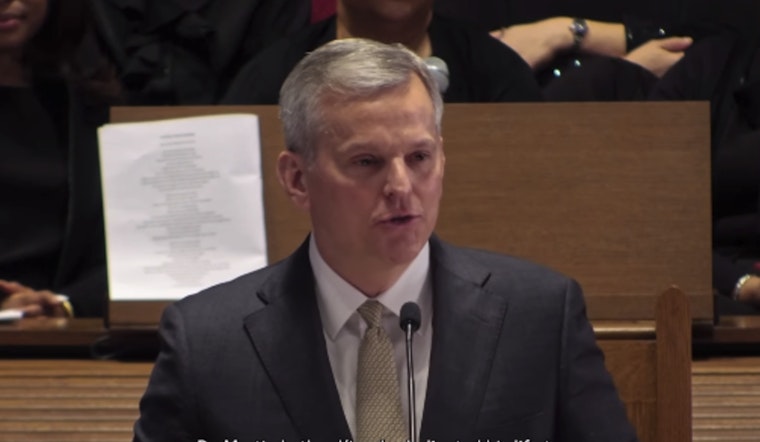
Yesterday, on the occasion of Martin Luther King Jr. Day, North Carolina’s Governor Josh Stein underscored the enduring relevance of Dr. King’s legacy in a statement. Released just a day prior to the federal holiday, Stein's words were not just commemoration but a call to action, touching on themes of progress, justice, and the ongoing struggle to live up to the nation’s founding ideals. “Dr. Martin Luther King Jr. dedicated his life to moving us toward the promise of our nation: a land of liberty and justice for all,” Governor Stein remarked, according to the Governor's Office official press release.
The Governor, clear-eyed in his acknowledgment of the state's shortcomings, echoed King's vision for continual advancement. Despite the pitfalls and the speed, he cited Dr. King's mantra that we must "keep moving forward." In doing so, Stein pinpointed key areas for growth, emphasizing a need for improving North Carolina's health system, enhancing educational institutions, ensuring community safety, and fostering genuine employment possibilities. Stein’s remarks suggest that these are the axes along which the wheels of progress must turn, striving for a North Carolina that serves the needs of all its residents, as per the Governor's Office.
Stein's reference to Dr. King's teachings was not purely historical; it carried a tangible blueprint for the future. "Dr. King’s commitment should motivate us all," Stein stated, leveraging the weight of King's words to propel the state's citizens and lawmakers into action, keen on building a "safer, stronger North Carolina that works for everyone." His statement operates as a modern-day roadmap, informed by Dr. King's philosophy, for addressing today's challenges in North Carolina, the Governor's Office reported.
Dr. King's dreams, while rooted in the Civil Rights movement of the 1960s, remain perennially significant, as Governor Stein's statement on MLK Day deftly underlines. By invoking the historical figure, Governor Stein bridges the gap between past and present, advocating to use the momentum generated by Dr. King's life to fuel present-day reforms.



