

























































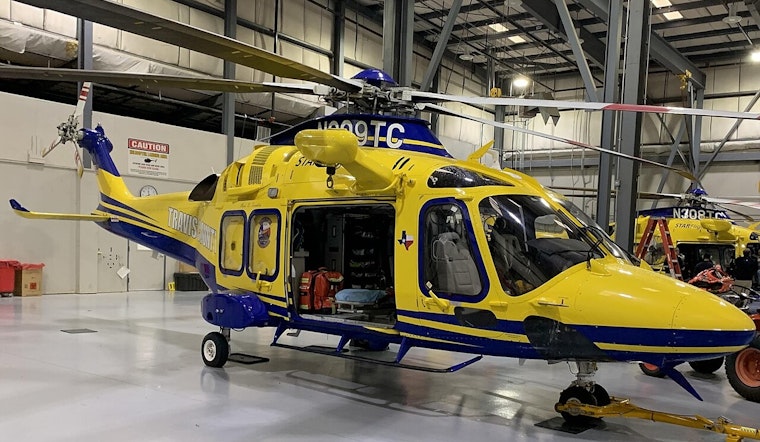
Travis County is gearing up to trade out its STAR Flight helicopter fleet under a roughly $60 million proposal pitched to commissioners this week. County staff say the swap is aimed at easing a mounting maintenance burden and long waits for spare parts that are driving up operating costs. They also cautioned that the changeover could take up to two years while new helicopters are built and crews are retrained. The big-picture goal, officials stressed, is to modernize and standardize the fleet so medevac, rescue, and firefighting missions keep running without a hitch.
County lays out a $60 million plan
In a briefing on Tuesday, county emergency services managers told the Travis County Commissioners Court that a comprehensive purchase package, three new helicopters plus training and spare parts, is expected to run about $60 million. Staff estimate the move could trim roughly $1.7 million a year from operating expenses, although how to pay for it is still up to county staff and the court to sort out. The new aircraft would be built to multi-mission specs so they can continue handling medical transport, search and rescue, and aerial firefighting, and county staff noted that phasing in fresh airframes will not happen overnight. As reported by FOX 7 Austin, officials framed the switch as a lifecycle and cost management move, not a response to an immediate safety crisis.
Recent procurement history
The county previously authorized a contract for Leonardo AW169 helicopters in 2017, and those newer airframes entered service in 2019 to replace older aircraft. Last May, the county purchasing office issued a Request for Information to gauge options and pricing for the next round of replacements, an RFI that is posted in public procurement records. Local documents describe the effort as part of a roughly 10-year replacement cycle. According to the Travis County archives, staff are now shaping detailed specifications ahead of issuing a formal RFP.
Maintenance headaches and parts delays
During the briefing, staff told commissioners that maintenance overtime has exploded, with one presentation slide pegging the increase in overtime hours at roughly 3,000 percent. The supply chain for specialized parts has also turned into a recurring headache, with multi-week groundings while components are sourced from overseas. STAR Flight managers said the county’s three operational AW169s cost just over $30 million when purchased and are now estimated to have a combined wholesale value of about $19 million, a figure that could help offset the cost of new helicopters. “Our maintenance overtime hours have gone up 3,000%,” STAR Flight medical supervisor Parick Phillips told the court. Officials said those operational pressures are a big reason they want to standardize on a single platform.
Which makers are in the running
Staff told commissioners they are prioritizing helicopters supported by strong U.S. maintenance and logistics networks in order to shorten parts lead times and reduce downtime. Manufacturers with American production or support footprints include Airbus, which has a U.S. campus in Grand Prairie and a final assembly line in Columbus, Mississippi, and Bell, which operates major manufacturing and research and development facilities in Fort Worth. Leonardo, maker of the current AW169 fleet, opened a support center in Florida last year that expands sustainment options for operators in the Southeast. Details are outlined by Airbus, Bell and Leonardo.
Next steps and the math
Based on the RFI process and recent staff briefings, a formal RFP and financing package could land on the Commissioners Court agenda if members decide to push ahead. The county has floated the idea of selling its existing helicopters to help offset the cost of new ones, and earlier summaries laid out a wide range of lifecycle costs depending on which aircraft and fleet size the court ultimately chooses. The RFI and procurement postings offer a rough roadmap for timing and technical requirements while staff refine the specifications that will guide any final decision. See the county’s procurement posting on BidNet and coverage of the options by Government Fleet.
In the coming weeks, commissioners are expected to weigh financing scenarios and technical requirements as staff bring back firmer cost estimates and tradeoffs. For now, the county’s pitch is simple enough: standardize the airframes, cut spare parts delays and rein in rising maintenance costs, then see if the numbers hold up when it is time to vote on the budget.





