

























































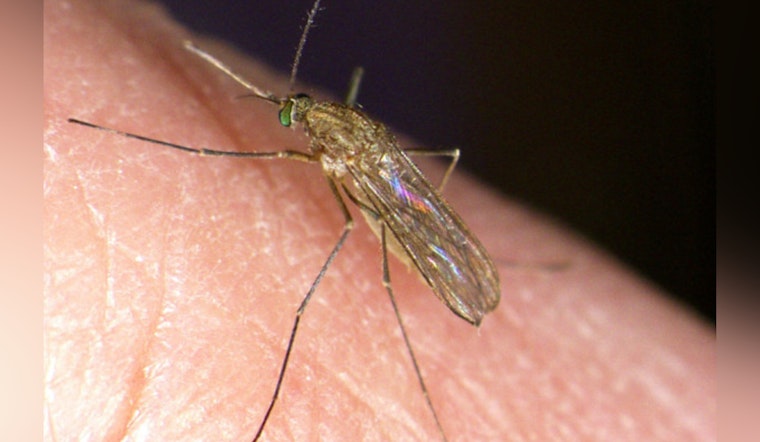
West Nile virus has officially crashed the party in Harris County, weeks before most people even start thinking about mosquito season. County health officials confirmed this week that mosquito samples from northern and northwestern neighborhoods tested positive for the virus, marking the first detections of 2026. Mosquito-control crews are already rolling out evening spray trucks while urging residents to do their part by dumping standing water around homes and yards. The early start, they say, is tied to an unusually warm winter that gave mosquitoes a head start on breeding.
Where the positive samples were found
Harris County Public Health said its Mosquito and Vector Control Division detected West Nile virus in mosquito samples from ZIP codes 77041 and 77032 in the north and northwestern parts of the county. In a news release, Dr. Courtney Standlee, who leads the division, noted that "it is unusual to find virus-positive samples this early in the year" and said the county's surveillance program is designed to catch exactly this kind of early activity. Officials described these as the first confirmed signs of the virus in Harris County this year.
How officials are responding
In response, local crews have been dispatching ultra-low volume, or ULV, spray trucks in the evenings, when mosquitoes like to come out and feed, as reported by ABC13. The county stresses that these are targeted operations focused on defined treatment zones, not a blanket countywide spray. The goal is to knock down mosquito numbers quickly in the affected areas and lower the immediate risk of transmission. Public health officials keep reminding residents that spraying helps, but it is no substitute for basic backyard and household prevention.
Numbers and risk
Harris County recorded 10 human West Nile cases in 2025 and 45 in 2024. So far in 2026, county officials say there have been no confirmed human cases, according to the Houston Chronicle. Health leaders are quick to point out that most people bitten by an infected mosquito never feel sick at all, or have only a mild, flu-like illness. Still, their immediate priority is to shrink local mosquito populations and interrupt any potential chains of transmission before those numbers get a chance to climb.
How to protect yourself
Harris County Public Health is once again pushing its "Tip, Toss and Take Action" playbook. That means tipping standing water out of buckets, flowerpots, and anything else that can collect rain, tossing items that routinely fill with water, and taking precautions such as using EPA-registered insect repellent and fixing window and door screens. The agency directs residents to the Harris County Public Health online map, which shows live data on positive mosquito pools and daily treatment zones. For water that cannot be emptied, officials recommend using safe larvicides, and they urge residents to keep outdoor faucets, drain,s and gutters in good repair so they do not turn into stealth mosquito nurseries. County leaders say that personal prevention and neighborhood cleanup are still the most powerful tools between those evening spray runs.
What symptoms look like
Federal health guidance notes that about 80 percent of people infected with West Nile virus never develop symptoms. Roughly 20 percent may experience a fever or other mild illness, and fewer than 1 percent develop serious neurologic disease. Anyone who develops a high fever, severe headache, neck stiffness, confusion or disorientation, or sudden weakness in an arm or leg should seek medical care right away, according to the CDC. Older adults and people with weakened immune systems face higher risks of severe complications.
County officials and local media say they will keep updating residents as mosquito surveillance and treatment continue. For now, the standing guidance is simple, if not glamorous: clear out that standing water, keep an eye on local reports for nightly spray schedules, and let the Houston Chronicle and local TV stations walk you through the latest maps and public notices as the response evolves.





