

























































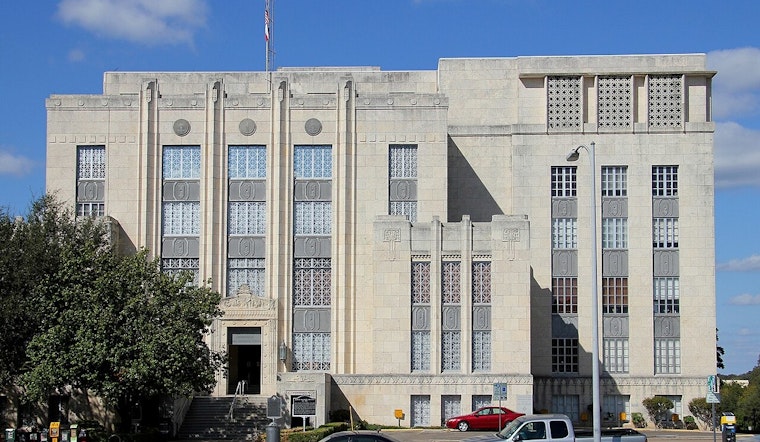
CrowdStrike showed up in an Austin business court on Tuesday, with a judge weighing a deceptively simple question: Does the cybersecurity company really belong in Austin, or is Texas just a convenient mailing address. The answer will decide whether a trade secrets trial brought by California firm GoSecure plays out in a Travis County courtroom or gets shipped back to California. GoSecure claims CrowdStrike built its Falcon platform using GoSecure’s confidential work, a claim CrowdStrike disputes. The hearing was briefly closed to the public after lawyers said they needed to discuss confidential material, and the judge did not issue an immediate ruling.
According to the Austin American-Statesman, GoSecure’s filing says two former employees, including a co-founder, "ripped off" systems the company spent years developing and used that work to help build Falcon. The filings include a screengrab that shows CrowdStrike referring to Austin as its "home" and say the company has identified emails for roughly 900,000 people believed to work at Texas companies. CrowdStrike has denied the allegations and asked the court to send the case back to California, arguing that the disputed conduct and decision makers are based outside Texas.
Plaintiff’s evidence and claims
GoSecure told the court it has evidence tying CrowdStrike’s growth to material it says originated with GoSecure, and it insists the Austin operation is far more than a marketing flourish. "These are not 'junior salespeople,'" GoSecure wrote, pointing to senior directors and engineers who work in Texas, according to the Austin American-Statesman. The company also says it has struggled to pry records from its opponent and has asked the court to consider sanctions over those discovery battles.
CrowdStrike’s response and Austin footprint
CrowdStrike has pushed back, saying any allegedly misappropriated work, along with the key decision makers involved, are tied to California rather than Texas. At the same time, the company designated Austin as its "principal executive office" in 2021, a move documented on the CrowdStrike blog. Many of its recent press releases carry Austin datelines, reflecting a significant local presence. CrowdStrike says its Sunnyvale operation remains a critical innovation hub, while describing its overall workforce as remote-first.
Litigation context and related cases
The Texas dispute landed here after GoSecure first filed in California in 2024, then refiled in Texas, where business courts tend to move cases faster, according to the filings. Related federal documents show the parties have traded patent petitions and IPR challenges, and those filings and motions are publicly visible on the case docket. Justia lists petitions and stay requests tied to those challenges, and Bloomberg Law has separately covered CrowdStrike’s litigation history connected to its 2024 outage.
What’s at stake for Austin
Judge Andrews’s venue decision will determine whether a full, technical airing of source code, hiring records, and marketing practices unfolds in front of an Austin jury or gets handled in California. Either way, the outcome carries big implications for local jobs, for the cost and scope of discovery, and for how tech firms describe where they are "headquartered" in an era where much of the workforce is scattered across time zones.
Legal implications
Venue fights like this one turn on whether a company’s ties to a state are sufficiently continuous and systematic, as well as on timing defenses such as statutes of limitation. Judge Andrews’s ruling will shape where GoSecure can press its detailed claims about source code and hiring, and it may ripple into the timing of related patent disputes and PTAB reviews that are already reflected in the federal docket.



