

























































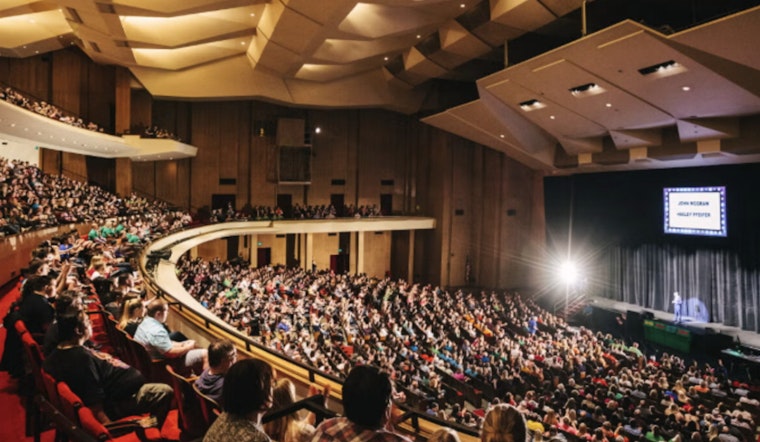
The long‑running fight over the future of downtown Portland’s landmark Keller Auditorium is back in the spotlight, with preservation advocates and backers of a new Portland State University venue publicly squaring off. A small group of activists gathered this week at the Keller Fountain to read statements against repurposing ideas and to press for a renovation that keeps the building as the city’s Broadway‑capable stage. At stake for city leaders is a big, expensive decision: modernize a century‑old, seismically vulnerable hall or build a new, larger venue on PSU’s campus.
Study Puts Weight Behind PSU Plan, Questions Two Broadway Halls
A municipal market‑feasibility study by Hunden Partners concluded Portland does not have the audience demand to sustain two Broadway‑caliber venues and recommended building a new Broadway‑capable center at Portland State instead of retrofitting the Keller. The study’s executive summary and full report are posted on the City of Portland website, and its findings have been widely covered, including in a market study story questioning two Broadway theaters by Hoodline.
Activists Rally at Keller Fountain
Members of the Save Keller coalition took their case public at the fountain, reading statements and firmly rejecting proposals to convert the auditorium into a children’s museum or a public market with food carts, according to The Oregonian. Organizers said roughly 20 people attended the gathering, where speakers pressed for a plan that preserves the Keller as the city’s primary home for touring Broadway productions and resident companies.
Money, Timelines and Moving Targets
The price tag is one of the sharpest dividing lines. The city has cited earlier projections that a full Keller renovation could run about $290.6 million, according to the City of Portland. By contrast, Portland State University reports it has already secured roughly $155 million in state, city and private commitments for its proposed Performing Arts & Culture Center.
Early planning sketches floated a faster sequence, with PSU construction potentially beginning in 2027 and a 2029 opening, but those dates have shifted in later materials. PSU now points to a later target of welcoming audiences around 2030, according to local reporting in Portland Monthly. Those evolving costs and timelines are set to be front and center as officials weigh which path is financially and logistically realistic.
Who Will Run the Show?
The debate is unfolding just as Metro prepares to return management of Portland'5 Centers for the Arts to the City of Portland by mid‑2027, a shift that could influence operating models and funding priorities. City and project leaders have stressed that the Hunden analysis is advisory, not binding, and that elected officials have not yet made a final call on the Keller’s fate. For now, a steering committee and the Mayor’s ex‑officio table are reviewing options, with additional context and coverage of the management transition available from Oregon ArtsWatch and The Oregonian.
What to Watch Next
In the coming months, the steering committee, the Mayor’s table and City Council offices are expected to fold the market study into a broader review that includes transportation, financial and operating analyses, then forward formal recommendations for the City Council to consider later this year. While that plays out inside City Hall, preservation groups, downtown developers and arts organizations are likely to ramp up public outreach, fundraising and advocacy as they jockey over whether the Keller is preserved, repurposed or replaced. Willamette Week has been tracking council moves and neighborhood reactions as this civic drama keeps unfolding.





