

























































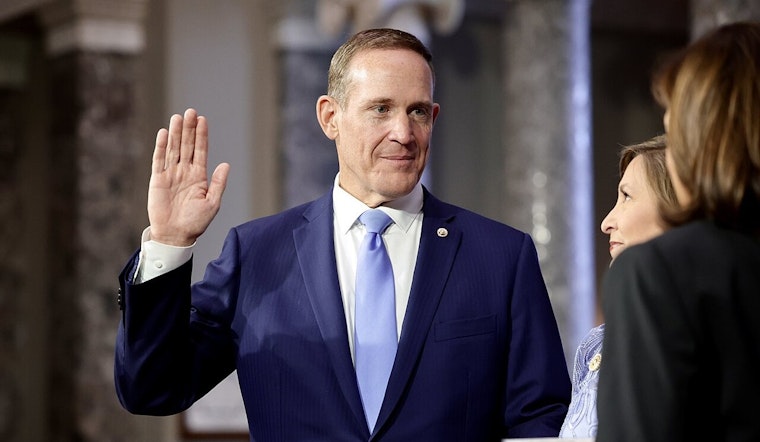
Western North Carolina leaders are watching hundreds of millions of dollars in disaster money sit on the sidelines, while Sen. Ted Budd goes on offense. In a Feb. 23 post on X, Budd said communities across the region are waiting on $229 million in FEMA public-assistance grants and pinned the delay on Democrats, tying the stall to a larger fight over funding the Department of Homeland Security and immigration enforcement. County and city officials, meanwhile, say they are still waiting for clear timelines on when the reimbursements will actually hit their books.
Communities across Western North Carolina are currently waiting on $229 million in public assistance grant funding from FEMA. This money is stalled until Dems come to the table and open an agency that North Carolinians rely on. https://x.com/i/status/2026067546340774151
— Senator Ted Budd (@sentedbuddnc) February 23, 2026
What Budd Posted And The Official Numbers
Budd’s social media message follows the same line his office has been pushing since January. In a Jan. 28 statement, his staff said the Department of Homeland Security had approved "more than $233 million" in public-assistance reimbursements for Hurricane Helene recovery projects in western North Carolina. According to a press release from Sen. Ted Budd, that approval came on the heels of an earlier batch of funding that FEMA highlighted in mid January. FEMA, in its weekly bulletin, noted a Jan. 14 announcement of roughly $116 million in Helene-related public assistance intended to reimburse debris removal, emergency protective measures and infrastructure repairs.
Why Some Payments Can Lag
The path from a federal agency approving money to a county actually cashing a check is rarely quick, and this winter the process has been tangled up with a national brawl over DHS funding and immigration enforcement. After deadly encounters involving federal agents in Minnesota in January, Senate Democrats withheld support for a broader spending package that included money for DHS, pressing for new oversight and tighter limits on ICE and Border Patrol operations. The resulting standoff threatened a partial lapse in DHS appropriations. The Guardian reported on those maneuvers, which piled political drama on top of an already complicated administrative process.
Local Impact And Next Steps
Even once Washington signs off on big numbers, local governments often wait weeks or months for those reimbursements to be fully obligated and then disbursed, a timing gap that has already pushed some counties to rely on short term borrowing or to postpone work. One recent example from Buncombe County, where 47 Buncombe County homeowners were invited into the federal hazard-mitigation buyout process, shows that federal programs are moving forward, but not always in a way that feels steady on the ground.
Regional outlets, including coverage tracking project-level awards, have noted that the January approvals outlined by the North State Journal still come with strings attached. Local officials must clear additional paperwork, work through FEMA project reviews and then wait for the money to move from federal ledgers to town and county treasuries.
Legal And Administrative Hangups
Layered on top of the political fight are legal and policy shifts that have repeatedly reshaped how grant programs are administered nationwide. Since 2025, multiple lawsuits and agency policy changes have, at different points, frozen or reworked aspects of disaster funding, and court rulings can slow the pace at which agencies apply new guidance. Litigation trackers from Just Security show a series of cases that intersect with FEMA and DHS decisions, leaving some approved awards stuck in limbo while judges sort out disputes.
Bottom line, Budd’s post taps into a very real frustration in Western North Carolina, where towns and counties need cash to finish long-promised repairs, but the bottleneck is not coming from a single valve. Federal approvals have been announced, congressional fights over DHS and ICE, as well as a thicket of administrative and legal shifts, have all combined to make the schedule for local reimbursements messy and uncertain.





