

























































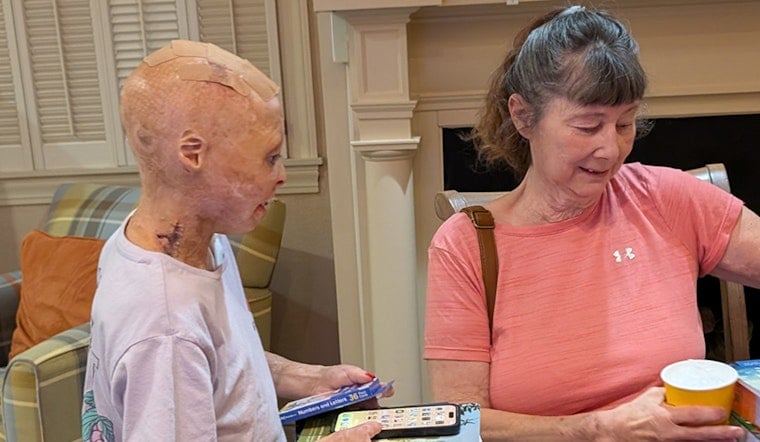
In North Carolina, the local firefighting community extends its duty beyond extinguishing flames, reaching into the lives of those scarred by fire's touch. One such instance is the story of Emily, a young girl whose life was irrevocably changed by a backyard accident that left her severely burned. Now, years after her ordeal, Emily continues to inspire as she receives ongoing specialized burn care. Her resilience has impacted firefighters, caregivers, and fellow burn survivors, aligning with the mission of the North Carolina Firefighters’ Burned Children Fund (NCFFBCF)—a nonprofit founded by firefighters devoted to aiding burn survivors and their families, according to the City of Charlotte.
The commitment of NCFFBCF recently came into focus during a Winston-Salem visit by Charlotte Fire Explorers and members of Charlotte Fire. This educational excursion, that included tours of the Atrium Health Wake Forest Baptist Burn Center, the Ronald McDonald House Charities Piedmont Triad, and the NC SECU House, provided insight into the extended care burn survivors require—showing the continuum of support from the scene of an accident to the long-term recovery process. Charlotte Fire Capt. Henry Cook, vocalized the organization's role, "Our main mission is helping people who have sustained burn injuries with non-medical expenses," Cook said, “Those are the things families don’t always think about until they’re suddenly living it,” as stated by the City of Charlotte.
These non-medical expenses include immediate necessities often overlooked until crisis strikes: lodging, meals, travel, and basic needs that are vital yet not covered by insurance. The City of Charlotte detailed how families, uprooted with little notice to be near specialized burn centers, find themselves unprepared for the extended stays away from home. The community-driven effort of the NCFFBCF assists with these issues, emphasizing that families should not be left alone to figure out these complex logistics amidst their loved one's recovery.
Moreover, during their visit, Explorer and firefighters not only toured facilities but also learned about the multifaceted care burn patients require. Medical staff conveyed the nuances of treatment and the broad spectrum of emotional and mental health challenges that survivors may encounter. Connecting the dots, Cook added, “It helped them understand what happens after the emergency response,” Cook said, “They saw the care, the teamwork, and the long-term commitment involved.” Cook told the City of Charlotte publication, sending a clear message about the depth of support the Fund seeks to provide.
Emily's ongoing treatment and interaction with Charlotte firefighters personify this support. Through advanced cell-based therapies and frequent visits to the Ronald McDonald House, Emily, despite being burned over 47 percent of her body, remains a beacon of hope and resilience. Now a vibrant fourth-grader, her positivity despite past traumas is an example of the enduring human spirit, serving as an inspiration to other families affected by burn injuries. "She’s been through more than most adults," Cook observed, “And she’s still one of the happiest kids you’ll ever meet.” Emily's story not only motivates others but also illustrates the importance of community for young burn survivors, as reported by the City of Charlotte. The effect of that community was clearly seen through the organization's efforts to provide support programs like burn camps, survivor retreats, and educational scholarships.
Established in the early 1980s, NCFFBCF has expanded from a local initiative to a comprehensive statewide network helping not just pediatric but also adult burn survivors. The Fund, sustaining its operations through various fundraising methods, including aluminum can recycling, continues to advocate for prevention education and survivor support networks—underlining that recovery goes beyond physical healing. Charlotte Fire Chief Reginald Johnson remarked on the Fund's reflection of the fire service's enduring commitment to the community. "Our firefighters don’t stop caring when the call ends," he said. The unwavering support of NCFFBCF stands as a testament to the firefighters' dedication—an emotion echoed by those directly affected and by Cook himself, "You see relief when families realize they’re not alone," he said. “That’s why we keep doing it,” as per the City of Charlotte. As NCFFBCF persists in its mission, it underscores the need for community backing to maintain its vital role in the lives of burn survivors across North Carolina.





