

























































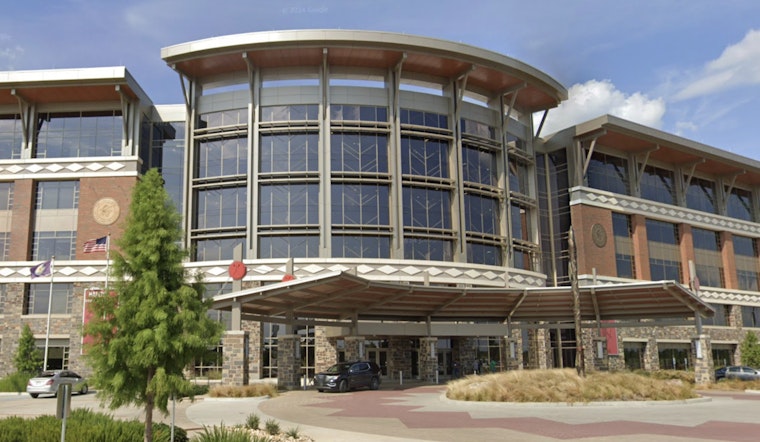
The Choctaw Nation of Oklahoma has moved to put non-Indian defendants more clearly within reach of its courts, amending its criminal code to spell out when tribal prosecutors may hold non-Indian people criminally responsible for offenses inside the Nation’s territorial boundaries, as far as federal law allows. The Tribal Council voted unanimously on Feb. 14, and Chief Gary Batton signed Council Bill 27-26 into law on Feb. 17, making the changes effective immediately.
What the bill does
According to the text of Council Bill 27-26 posted by the Choctaw Nation, Section 151 of the criminal code was amended to delete a sentence that had said non-Indians generally may not be convicted, with only a narrow reference to the Violence Against Women Act. In its place, lawmakers added a new subsection stating that “all non-Indian persons” are liable to punishment “insofar as such shall be consistent with the Constitution and laws of the United States.”
The amendment also broadens the criminal code’s territorial definitions. It now expressly includes Article I, Section 2 constitutional territory, Indian-country trust lands and other territory subject to Choctaw jurisdiction, tightening up what counts as on-reservation for purposes of prosecution.
Federal law and ongoing litigation
The shift arrives in the middle of a complicated federal legal landscape. As the Justice Department explains, Congress first granted tribes limited criminal authority over certain non-Indian offenders in the 2013 reauthorization of the Violence Against Women Act and then expanded that authority in 2022.
At the same time, a closely watched case in eastern Oklahoma is testing the edges of that authority. A magistrate judge’s Oct. 1, 2025 report and recommendation, filed on CourtListener, evaluates whether a tribe may prosecute a non-Indian defendant and could influence how federal courts view tribal criminal reach in the region.
Tribal leaders' rationale
Sean Bradley, the tribe’s executive director of legal operations, told NonDoc that the amendments “modernize and strengthen” the Choctaw Nation’s criminal code. He said the changes clarify who may be prosecuted and ensure the Nation’s jurisdiction is exercised to the fullest extent federal law permits.
Tribal certification of the Feb. 14 regular session in Tuskahoma shows an 11-0 vote in favor of the bill. Certification records also note Chief Batton’s signature on Feb. 17 and confirm that the law took effect immediately on that date.
Legal implications
For decades, tribes have generally lacked inherent criminal jurisdiction over non-Indians under the U.S. Supreme Court’s 1978 decision in Justia on Oliphant v. Suquamish. That background means Choctaw prosecutions of non-Indians will depend on specific federal statutory authorizations and how courts interpret them.
Legal observers say the new Choctaw language, which folds applicable federal law directly into the tribal code, all but guarantees litigation if prosecutors try to apply it to non-Indian defendants. Those cases could become early tests of how broadly tribal courts in eastern Oklahoma are allowed to operate under the evolving mix of federal statutes and court decisions.
What’s next
Choctaw officials say the amendment closes jurisdictional gaps, aligns tribal law with federal statutes and clarifies the Nation’s territorial reach. Supporters argue that tightening those rules could improve public safety on reservation lands by reducing uncertainty over who can be charged where.
Defense attorneys and some state officials, however, are already predicting swift legal challenges if the tribe brings cases against non-Indians using the new wording. Those fights are expected to be closely watched, since any rulings will help define the practical limits of CB-27-26 as written in the official text posted by the Choctaw Nation.





