

























































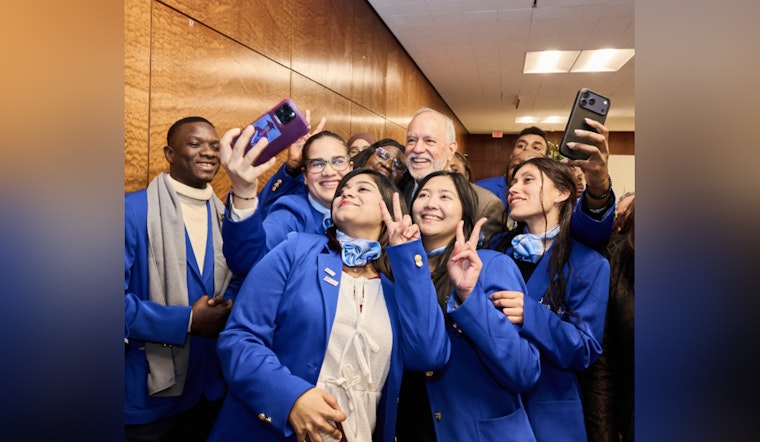
The City University of New York is rolling out a universitywide overhaul of how it handles discrimination, harassment and campus conflict, coupling a centralized incident portal with required civil-rights training and expanded constructive-dialogue programs. University leaders say the package is meant to speed up reporting and investigations while adding more mental-health and counseling support for students drawn into protests and heated debates. The measures apply across all 26 CUNY colleges as administrators try to cool tensions that have roiled campuses in recent semesters.
As reported by The EDU Ledger on Feb. 20, 2026, the overhaul includes an upgraded reporting platform overseen by the CUNY Center for Inclusivity and Equal Opportunity, mandatory Title VI civil-rights training for full-time faculty and staff, and an expanded constructive-dialogue rollout. "Hate has no place at The City University of New York," Chancellor Félix V. Matos Rodríguez told The EDU Ledger.
Centralizing complaints and support
The initiative revolves around a new central office that will manage reports and standardize investigations across the system in an effort to cut down on uneven outcomes between campuses. According to CUNY, the Center for Inclusivity and Equal Opportunity will also serve as a clearinghouse for supportive services, including campus counseling centers, a 24/7 crisis-text line and an anonymous peer-to-peer platform, while overseeing a redesigned incident-reporting portal and regular data monitoring. University materials say those steps are intended to accelerate responses and improve transparency for both complainants and respondents.
Federal oversight and training commitments
Legal pressure helped shape the plan. The U.S. Department of Education’s Office for Civil Rights announced the resolution of nine complaints against CUNY in June 2024 and required expanded training for investigators and new climate assessments. Per the OCR press release, the voluntary resolution requires CUNY to strengthen training and reporting mechanisms to ensure Title VI compliance and to review past complaints where necessary. That federal framework now forms the backdrop for CUNY’s push to codify Title VI training and clearer investigative practices across its campuses.
Constructive dialogue goes systemwide
CUNY is scaling a partnership with the Constructive Dialogue Initiative to place trained facilitators on every campus as part of the rollout. The EDU Ledger reports that since 2024 more than 280 faculty members and 170 students have completed foundational CDI training or facilitator certification, and that over 5,000 members of the CUNY community have finished a six-session "Perspectives" course in civil discourse. The university says the expansion is backed by city and private funding and will deploy facilitators across all 26 colleges, building on earlier local investments and training pilots noted by CUNY.
What’s at stake
Observers say the overhaul responds directly to Judge Jonathan Lippman’s review, which urged centralization and clearer accountability after interviews with hundreds of students, faculty and administrators. In a statement accompanying his report, Judge Lippman warned that inconsistent policies and uneven enforcement left some students feeling unsafe, a concern echoed in federal findings and oversight. With OCR monitoring still active, advocates and policymakers say CUNY’s implementation will be judged not only on new rules but also on whether the university actually shortens investigation timelines, increases transparency and prevents repeat harms.
City officials, student groups and campus leaders now have a short list of concrete milestones to watch: whether the revamped reporting portal gives clearer status updates, whether the mandatory Title VI modules reach every full-time employee, and whether trained facilitators change how contentious issues are handled in classrooms and student life. How CUNY balances free expression, civil-rights protections and campus safety in practice will shape both local debate and national models for large urban public systems.





