

























































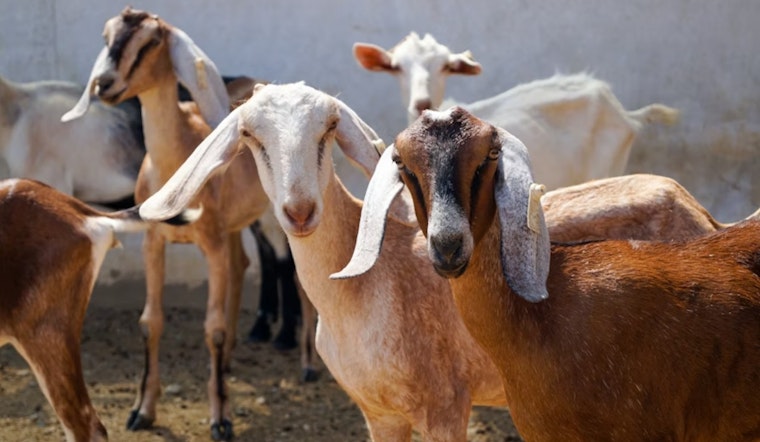
White Rock Lake has some new four-legged contractors on the clock. A herd of roughly 260 goats arrived yesterday to chow down on dense stands of invasive privet along the east shore near the Bath House Cultural Center. The animals are part of a city vegetation-management project that will move through roughly 11.5 acres in daily 1- to 1.5-acre sections over about 10 to 11 days. Park staff are stressing that these are working animals, not a pop-up petting zoo, and they are asking visitors to keep a safe distance.
Where the herd came from and the numbers
City officials put the deployment at 260 goats in a press release, with trucks hauling the animals in from Fort Worth and Weatherford, according to the Lake Highlands Advocate. Reporters who saw the herd on site described the count a bit more loosely as "about 300," as The Dallas Morning News noted. The city is pitching the effort as an eco-friendly way to clear out invasive shrubs in an area where heavy machinery would be too disruptive.
Why goats?
The main target is invasive privet, a fast-growing shrub that crowds out native plants and can increase erosion and wildfire risk. Goats are especially effective at tearing through woody shrubs and berries, which makes them a natural fit for this kind of cleanup. The city contracted with Open Space TX to supply the herd, and the animals can chew through roughly an acre to an acre and a half a day, KERA News reports. Because goats leave almost no green waste behind, crews say the process returns nutrients to the soil instead of requiring piles of brush to be hauled away.
How the operation works
Park crews are steering the herd through a series of fenced sections. An electric mesh fence is moved daily to open up a fresh grazing zone, while a shepherd keeps watch on the animals around the clock. The project will cover about 11.5 acres over roughly 10 to 11 days, with the city paying about $1,300 per acre, The Dallas Morning News reported. Officials say the goats’ hooves help break up old thatch on the ground, opening space for native wildflowers to return once the privet is knocked back.
Not the first time Dallas has gone furry
This is not Dallas’ first rodeo with rented ruminants. Last spring, a herd of 250 grazed the Bachman Greenbelt as part of a similar restoration effort, per earlier coverage and a city bulletin. The city has been leaning on grazing as a tool at sensitive sites where machinery would do more harm than good; a herd of 250 grazed the Bachman Greenbelt, Hoodline reported. Park managers describe goat grazing as a short-term tactic that thins invasive plants so crews can return later to replant with native species.
What visitors should know
Signs around the site warn people not to touch the animals or the electric fence, and staff are asking onlookers to take photos from a distance. The goats are on the job and under supervision at all times. Park officials say the Bath House area will remain open during the project, but they are urging drivers to use designated parking and avoid blocking nearby homes. After the herd finishes its run, crews plan to follow up with native planting and standard trail maintenance, officials said; KERA News has noted similar restoration follow-ups in previous projects.



