

























































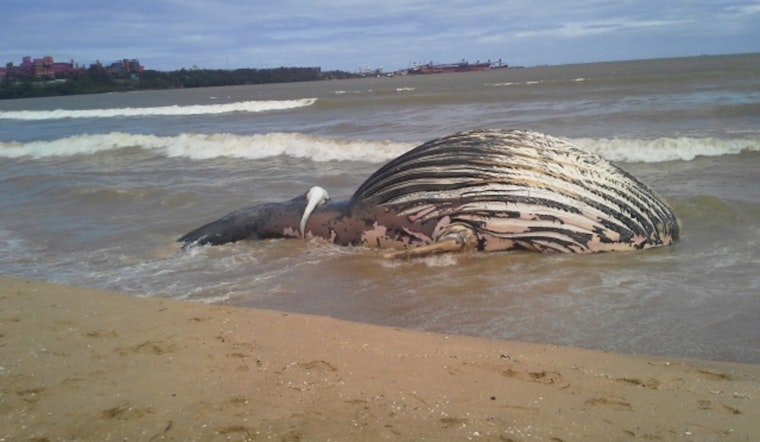
A juvenile humpback whale washed ashore on the Balboa Peninsula in Newport Beach on Wednesday, already dead by the time it hit the sand. Newport Beach lifeguards and marine-mammal responders quickly roped off the area, collecting initial samples and mapping out plans for a full necropsy as beachgoers gathered for a closer look from behind the tape. Officials reminded the public to keep their distance, no matter how tempting the photo op.
Where It Washed Ashore
According to NBC Los Angeles, the carcass came ashore near 13th Street, between the Newport and Balboa piers and not far from Newport Elementary School. The outlet reports that a team from the Pacific Marine Mammal Center joined Newport Beach lifeguards and marine safety personnel at the scene.
KABC/ABC7 reported that the whale was about 30 feet long and weighed an estimated 10 tons. The station noted that people had spotted the whale floating offshore to the south earlier in the day, and that marine mammal experts were hoping an incoming storm might tug the carcass back out to sea.
NBC Los Angeles also reports that responders collected some necropsy samples on Wednesday, with a more extensive exam postponed until Thursday. The necropsy team is expected to return to the beach to perform additional sampling and to work with city crews on options for removing the whale.
Why Necropsies Matter
According to the Pacific Marine Mammal Center, post-mortem exams can reveal whether a whale suffered a vessel strike, became entangled, was sick, or was dealing with poor nutrition. Tissue samples can also point to broader patterns in ocean health. Those findings help researchers understand what is threatening whales and other marine life along the Southern California coast.
Public Safety and Next Steps
The National Oceanic and Atmospheric Administration urges people not to approach or touch dead marine mammals, warning that carcasses can carry pathogens and may draw sharks. The agency asks anyone who spots a dead or distressed marine mammal to contact local authorities or the NOAA stranding hotline instead. Standard procedure is for responders to secure the area, gather samples, and then decide whether the animal can be towed out to sea or needs to be removed from the beach for disposal and testing.
Local crews had hoped that strong storm tides might refloat the whale and spare the city a complicated removal operation, KABC/ABC7 reported. If the carcass stays on the sand, public-works and marine-safety teams typically coordinate with the Pacific Marine Mammal Center and federal partners on a removal plan, which can require heavy machinery, permits, and specialized hauling.
Necropsy results can take days or weeks while lab analyses are completed, according to NOAA Fisheries. City and marine-mammal teams are expected to remain on site and will update the public once investigators wrap up the initial post-mortem work.



