

























































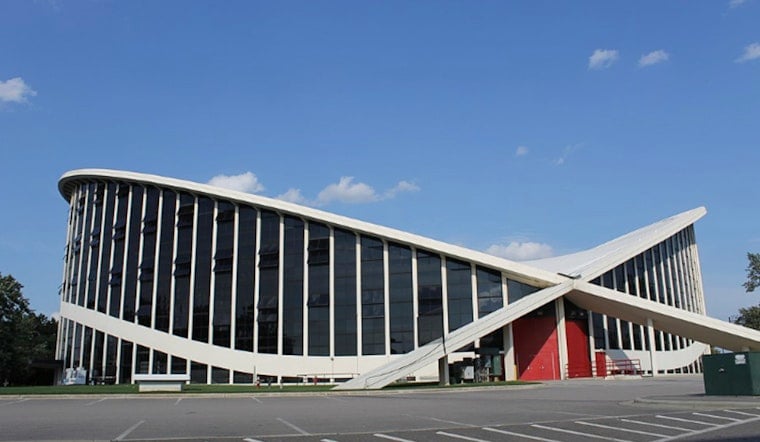
Raleigh's J.S. Dorton Arena, the midcentury landmark on the North Carolina State Fairgrounds, is on deck for a careful refresh that aims to pull the venue into today's competitive events market without messing with its instantly recognizable silhouette. A local developer is floating a renovation plan meant to lure more concerts, sporting events and corporate gatherings, all while keeping the arena's signature cable‑supported roof and sweeping parabolic arches intact. For generations, the arena's column‑free floor and saddle‑shaped roof have anchored the State Fair and become shorthand for Raleigh's architectural identity. The proposal marks one of the city's most high‑profile tests of how to balance historic preservation with the region's growing appetite for live events.
As reported by Triangle Business Journal, the plan, laid out in reporting by Kate Tracy and photographed by David Purtell, is framed as a modernization effort that keeps Dorton Arena's historic bones while boosting its appeal to promoters and corporate clients. The Business Journal notes that the developer wants to bring Dorton Arena "into the modern era," but there is still no announced construction timetable or finalized financing package.
Why the arena matters
Completed in 1952, Dorton Arena was a trailblazer in tensile‑structure engineering and is widely recognized as the first permanent building to use a cable‑supported roof, a distinction highlighted by the American Society of Civil Engineers. The arena, still part of the State Fairgrounds, offers roughly 25,000 square feet of column‑free floor space for exhibitions, graduations and mid‑size events, according to the North Carolina Department of Agriculture and Consumer Services. Those design quirks and its state ownership mean any renovation will have to juggle technical upgrades, historic‑preservation priorities and the all‑important fair‑season schedule.
What’s next for bookings and work
The Triangle Business Journal reports that the developer's proposal positions Dorton to compete with newer mid‑size venues across the region, but it stops short of spelling out a firm construction calendar or how the work will be paid for. Because the arena sits on state‑owned fairgrounds, any deal or building schedule will likely hinge on negotiations with state officials and approvals from local permitting agencies. Promoters, community groups and preservation advocates will be watching closely for design submissions, public filings and upcoming council or state review meetings.
Preservation watch
Preservationists and local planners have long treated Dorton as sacred ground for modernist architecture, and the Raleigh Historic Development Commission maintains detailed documentation underscoring its landmark status. As the city and state weigh the push for more events against the arena's cultural and architectural value, the fine print in forthcoming public records and negotiations will reveal whether Dorton's midcentury character can get a facelift without losing the features that made it a one‑of‑a‑kind piece of Raleigh's built history in the first place.





