

























































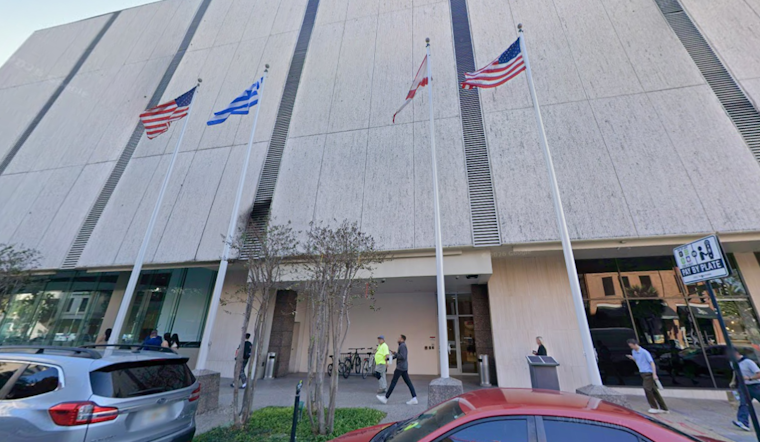
Federal agents arrested 34-year-old Christopher Alexander Delgado of Apopka yesterday, accusing him of running an Orlando-based investment business that prosecutors say pulled in hundreds of millions of dollars. In a federal complaint, Goliath Ventures is described as a Ponzi-style operation that ran for several years and redirected investor money into real estate and other purchases. The arrest is a pivotal turn for anxious investors, many of whom say their withdrawals dried up late last year, and for local regulators now trying to follow the money.
What prosecutors say was really going on
According to the U.S. Department of Justice, the criminal complaint alleges that Goliath Ventures operated from January 2023 through January 2026 and raised at least $328 million. Prosecutors have charged Delgado with wire fraud and money laundering and say he bought four residential properties worth between roughly $1.15 million and $8.5 million. The filing notes that federal agents carried out the arrest and that the case will be prosecuted in the Middle District of Florida.
Victims' rights and how to get on the radar
The U.S. Attorney's Office for the Middle District of Florida said on X that victims identified by law enforcement will receive notice of their rights under the Crime Victims' Rights Act. Officials are urging anyone who believes they were harmed to contact [email protected] and to use federal resources that explain how to self-identify and register with investigators. Prosecutors are also asking potential victims to hang on to emails, contracts, and transaction records to support recovery efforts and any future restitution claims.
Victims identified by law enforcement will receive notice of their rights pursuant to the Crime Victims’ Rights Act. You can also visit https://t.co/v5mC7FbsjN for more information on how to self-identify yourself to law enforcement. https://t.co/4iiJ2uCJaL
— USAO Middle Florida (@USAO_MDFL) February 24, 2026
Civil suits start piling up
The criminal case is not the only legal trouble circling Goliath. As reported by InvestmentNews, an investor filed a civil complaint last Wednesday alleging that Goliath pitched guaranteed monthly returns and then froze withdrawals in November. The lawsuit claims the company framed deals as a "joint venture" in an effort to sidestep securities registration requirements and seeks damages for unrecovered funds. That civil filing lays out a paper trail that closely tracks the federal allegations and offers civil attorneys additional paths to chase assets.
Why crypto "guarantees" set off alarms
Federal law enforcement has been warning for years that platforms promising fixed, high returns on cryptocurrency investments are often anything but legit. The FBI's Operation Level Up has already identified thousands of victims in similar schemes. According to the FBI, proactive victim notification and fast reporting can curb losses and strengthen investigations. Local attorneys who represent defrauded investors say the same thing in plainer language: the sooner records are preserved, and reports are filed, the better the odds of seeing any money back.
What Delgado could be facing in court
The complaint charges Delgado with wire fraud and money laundering, offenses the Justice Department has signaled it intends to prosecute aggressively. Wire fraud, under Cornell Law School (18 U.S.C. a7 1343), carries a potential maximum sentence of 20 years. Certain money-laundering violations, described at Cornell Law School (18 U.S.C. a7 1956), are also punishable by lengthy prison terms. Any actual sentence would depend on federal guidelines and the amount of restitution ordered. On a separate track, civil plaintiffs are seeking damages that could supplement restitution or be tapped in forfeiture proceedings if prosecutors ultimately prevail.
Delgado is expected to make his first federal court appearance in the coming days as investigators continue charting the scope of investor losses. Prosecutors say the probe is still active and are encouraging anyone with information to reach out to the U.S. Attorney's Office or the victims' email account referenced above. The X post includes instructions on how to self-identify and submit information to investigators. Local investors, many of whom are still in the dark about what happened to their money, are watching closely to see whether seized assets will come anywhere close to covering the damage.




