

























































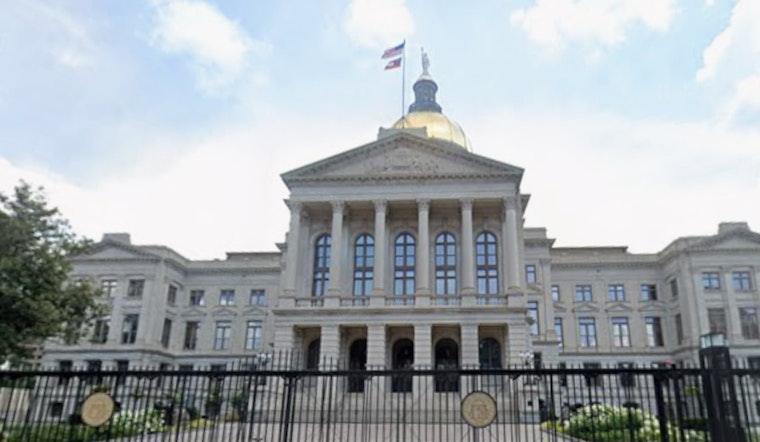
Georgia Democrats took their fight over the ballot straight to the State Capitol on Thursday, rolling out a state-level Voting Rights Act they say is designed to protect Black voters and other communities of color in what they describe as a volatile election year.
Framed as a direct response to recent federal actions and a wave of new voting restrictions, the proposal is pitched less as a symbolic gesture and more as a concrete attempt to lock in protections before the next round of political chaos hits.
What’s in the bill
The measure, formally named the Henry McNeal Turner Voting Rights Act, is structured to mirror key federal protections that voting-rights advocates say have been weakened in recent years. According to Democracy Docket, the bill would require counties with documented histories of racial discrimination to get approval before changing voting practices, expand language access at the polls, bar tactics that dilute the voting power of communities of color and allow private citizens and local governments to sue in Georgia courts over discriminatory rules.
Backers say that combination is meant to function as a state-level shield, especially where federal protections are absent or tied up in court.
Lawmakers' pitch
“Georgia voters have lived through years of constant changes of election rules and repeated efforts that make it harder for eligible people to participate in voting,” Sen. Nikki Merritt said at the unveiling under the Gold Dome. She argued the state needs stable, predictable rules so people are not constantly guessing whether they can cast a ballot without jumping through new hoops.
Sponsors cast the bill as both a policy fix and a political statement, signaling their frustration with recent moves in Washington while trying to write their own rules closer to home, according to Democracy Docket.
Why now: Fulton County raid
The timing is no accident. The rollout came just days after federal agents executed a search warrant at the Fulton County Elections Hub and seized hundreds of boxes of ballots and other election records, a move that has rattled local officials and injected fresh distrust into an already tense environment.
Questions about how those materials are being handled and what motivated the seizure have only heightened Democrats' urgency to build in state-level protections for voters and voting data. The Atlanta Journal-Constitution reported details of the raid and the scramble for answers that followed.
Advocates and opponents weigh in
Civil-rights groups and voting-rights advocates flanked Democrats at the Capitol event, arguing the bill is not some academic exercise but a necessary check on ongoing efforts to restrict access to the ballot.
In a joint press release, the Legal Defense Fund and Fair Fight Action said the Georgia VRA would prohibit discriminatory voting practices, expand language access for voters who need it and serve as “a firewall” when federal protections fall short. Their statements and supporting materials were posted by The Legal Defense Fund.
Opponents, including Republican leaders who control the General Assembly, have not rushed to embrace the proposal, setting the stage for a familiar clash over how far the state should go to referee its own elections.
Legal implications
One of the bill’s sharpest edges is legal. It would create a state-based pathway to challenge allegedly discriminatory voting rules, giving civil-rights groups, local governments and individual voters the option to take their cases to Georgia courts instead of relying solely on federal judges.
That new option is surfacing at the same time civil-rights organizations are suing to block the federal government from misusing voter information seized in the Fulton County operation, as reported by The Guardian. Fulton County officials have also indicated they plan to pursue motions to recover the seized election materials, according to The Atlanta Journal-Constitution.
Supporters of the bill say those legal fights underscore exactly why they want a robust state framework in place, rather than relying on uncertain federal remedies.
Democrats readily concede the proposal has a steep climb in a Republican-controlled legislature, but insist it is important to put a detailed blueprint for state-level voting protections on the table. They also say it gives voters a clear contrast between their vision and the current rules.
Next up are committee referrals and public hearings under the Gold Dome, where the measure will either gain momentum or quietly stall out. The unveiling at the Capitol, along with the early political reaction, was covered by FOX 5 Atlanta.



