

























































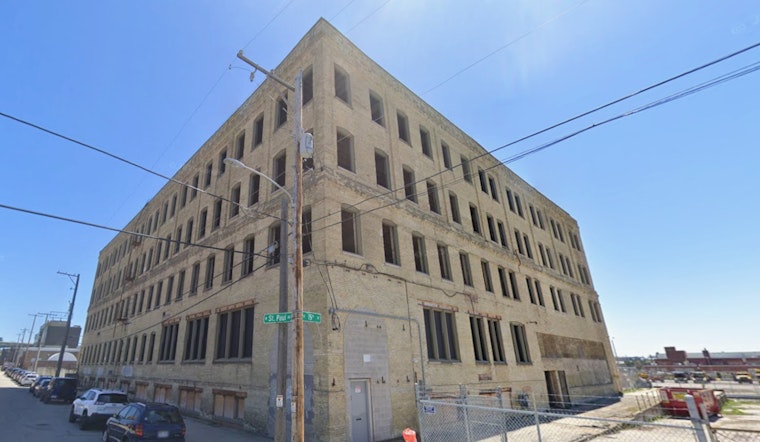
The long-vacant cream-city brick factory at 324 N. 15th St. in Milwaukee’s Menomonee Valley is on track to trade dust and pigeons for residents. Developer Ken Breunig has filed formal plans to convert the four-story, roughly 60,000-square-foot building into 47 apartments, with new parking on an adjacent lot. The structure has been mostly empty for about 40 years, and the project already cleared a key policy hurdle when the Common Council signed off on a minor plan amendment last November.
As reported by the Milwaukee Journal Sentinel, Breunig’s group bought the factory and an adjacent parcel for about $1.32 million in December 2024 and has submitted renovation plans to the Milwaukee Historic Preservation Commission. The paper notes the cream-city brick building dates to the late 19th century and has sat largely vacant for decades. Breunig told the Journal Sentinel in a Feb. 14 email that the National Park Service has already approved proposed exterior work, and the paper reports that the development team plans to pursue state and federal historic-preservation tax credits to cover a large share of renovation costs.
What the Developer Wants
Breunig’s proposal centers on market-rate apartments stacked above ground-floor commercial space, paired with a separate parking structure on the neighboring lot. According to BizTimes Milwaukee, the Plan Commission and the Department of City Development raised questions about safety and land use, even as preservation advocates and some nearby businesses argued that reuse is far better than a wrecking ball. Supporters say the rehab could stabilize a highly visible, blighted stretch along West St. Paul Avenue and put long-idle square footage back to work.
Historic Credits and Approvals
The financials lean heavily on incentives and a stack of approvals. City planning documents show that on Nov. 26, 2024, the Common Council adopted a minor plan amendment that allows a one-time rezoning exception for 324 N. 15th St., according to the Milwaukee Department of City Development. On the funding side, federal and state rehabilitation tax credits are key: a 20% federal credit administered through the National Park Service and an additional 20% Wisconsin credit can be combined to cover roughly 40% of qualified rehab costs, a share developers describe as essential for making the project feasible.
Neighbors, Jobs and the Valley’s Future
Menomonee Valley Partners and many of the valley’s manufacturers have long pushed to keep the corridor primarily industrial, arguing that the focus protects family-supporting jobs. Even so, stakeholders struck a late-2024 compromise that treated this particular property as a one-off case and cleared the way for reuse, as detailed by Urban Milwaukee. That truce, along with assurances that the rezoning would not be repeated elsewhere in the valley, helped unlock the sale and gave Breunig room to pursue renovation rather than demolition.
Next Steps and Timeline
With plans officially filed, the project now enters the permitting and design-review gauntlet. Renovation drawings are pending before the Milwaukee Historic Preservation Commission, and several site elements, including a proposed one-story, 44-space parking garage and other modifications, will need separate approvals such as the Board of Zoning Appeals, the Milwaukee Journal Sentinel reports. Breunig says he is waiting on federal and local sign-offs before construction begins, while supporters hope the overhaul will finally clean up a long-neglected, high-profile corner of the Menomonee Valley.




