

























































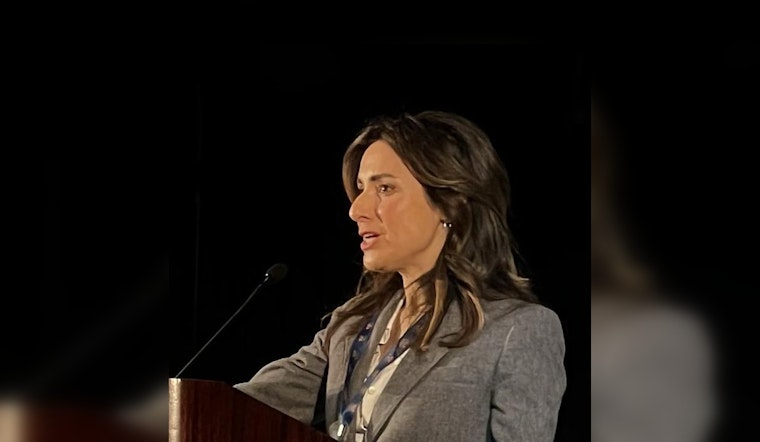
Austin state representative Gina Hinojosa, now running for governor, is turning up the heat on Gov. Greg Abbott over Winter Storm Uri, arguing that the deadly 2021 blackout turned into a jackpot for parts of the gas industry while Texans were left with sky-high bills and little accountability.
At a weekend stop, Hinojosa again blasted Abbott and lawmakers for what she calls a failure to seriously rein in energy companies after the grid collapse. Her campaign followed up with a statement tying the storm’s death toll and lingering utility debt to what it labels a pattern of “corruption” at the Capitol, pointing to industry profits and recent pro-Abbott endorsements, as described by the El Paso Times.
Where the profits came from
Post-storm investigations and financial disclosures showed a split-screen outcome: several midstream and gas-trading firms booked huge gains while many power generators and utilities lost billions.
Energy Transfer, one of the pipeline operators Hinojosa has singled out, reported roughly $2.4 billion in earnings tied to the freeze, according to the Houston Chronicle. Separate analyses estimated about $11 billion in total windfalls for gas sellers during the emergency, a figure cited by E&E News.
Lawsuits and investigations
Those profits have been dragged into court. Civil lawsuits and subsequent reporting allege that some companies diverted or withheld gas supplies at the height of the storm, only to sell fuel later at far higher spot prices. Plaintiffs say that behavior deepened outages and saddled cities and utilities with massive costs.
The claims are laid out in a multi-defendant petition filed in Harris County, available via Scribd. Follow-up coverage has noted that federal regulators flagged trading “anomalies” tied to Uri, including reporting in the Express-News.
The money trail to Abbott
Hinojosa’s campaign links those emergency-era gains to what it portrays as a money-and-influence problem benefitting the governor’s political operation.
Public campaign finance records show pipeline executive Kelcy Warren, associated with Energy Transfer, contributed $1 million to Abbott’s committee, according to Transparency USA. Hinojosa’s team has also highlighted industry-aligned endorsements for Abbott in the governor’s race, a trend described in coverage by the El Paso Times.
Hinojosa’s demands
In response, Hinojosa is pushing a platform that centers on tougher rules for the grid and gas supply chain. She is calling for stronger winterization standards on both gas and power infrastructure, more aggressive oversight, and penalties designed to curb disaster profiteering and shield ratepayers from the kind of price shock that followed Uri.
Those planks sit at the core of her statewide pitch on accountability and corporate influence in Austin, as laid out in Gina Hinojosa’s campaign materials and earlier local analysis.
Political fallout
All of this has turned the memory of Uri into a live wire in the 2026 governor’s race. Democrats are trying to convert lingering anger over storm-related costs and corporate clout into turnout, while some unions are splitting their endorsements across the ballot instead of lining up neatly behind one camp.
The clash over donations, oversight, and grid reliability is now shaping endorsements and stump speeches headed into the spring primaries, a pattern tracked by The Texas Tribune.





