

























































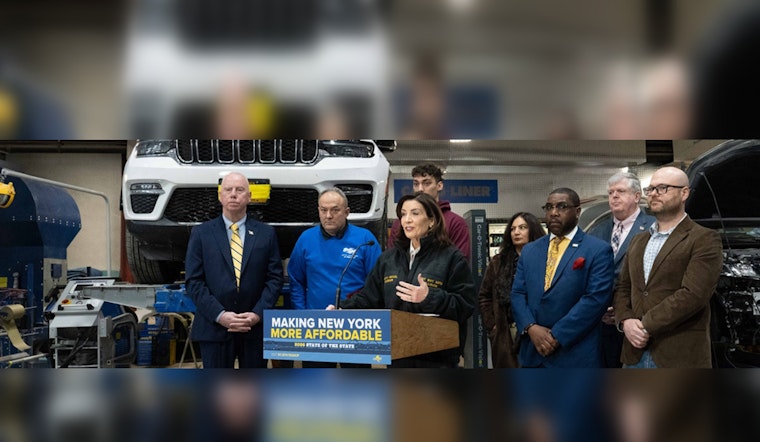
Kathy Hochul proposed measures to address rising auto insurance costs in New York by targeting fraudulent claims and high litigation expenses. Speaking on Long Island, she outlined plans to reduce the impact of fraud and excessive legal costs on premiums. According to a recent press release from the Governor’s office, average car insurance rates in New York are approximately $1,500 higher than in neighboring states, with increases of up to 80% in areas such as Long Island since 2019.
During her address, Kathy Hochul highlighted the effects of auto insurance fraud on consumers and the broader insurance system. She noted that over 38,000 suspected cases of fraud were reported in New York in 2023 and outlined measures to address the issue. Her proposals include reforms to tort laws, higher penalties for fraudulent activity, and the creation of a cross-agency task force to support enforcement efforts.
Kathy Hochul’s proposals come amid recent cases of alleged insurance fraud, including a surgeon in Deer Park linked to a staged accident scheme and an organized group in Freeport accused of pursuing fraudulent lawsuits. The plan seeks not only to reduce insurance premiums but also to address broader fraudulent practices within the system. A key element involves revising recovery laws to prevent drivers involved in accidents or staged crashes from receiving improper insurance payouts.
Kathy Hochul was joined by Mert Duman, whose family operates Bestway Auto Collision, to highlight the impacts of insurance fraud. Duman described challenges faced by the vehicle repair industry when handling cars involved in suspicious accidents and emphasized the need for a system that protects law-abiding New Yorkers while holding fraudulent actors accountable.
Kathy Hochul reaffirmed her commitment to addressing auto insurance fraud and protecting law-abiding residents from its financial impact. The proposed reforms aim to curb fraudulent activity and its effect on premiums, though it remains uncertain whether these measures will produce reductions comparable to the roughly 20% decrease seen in Florida following similar reforms.





