

























































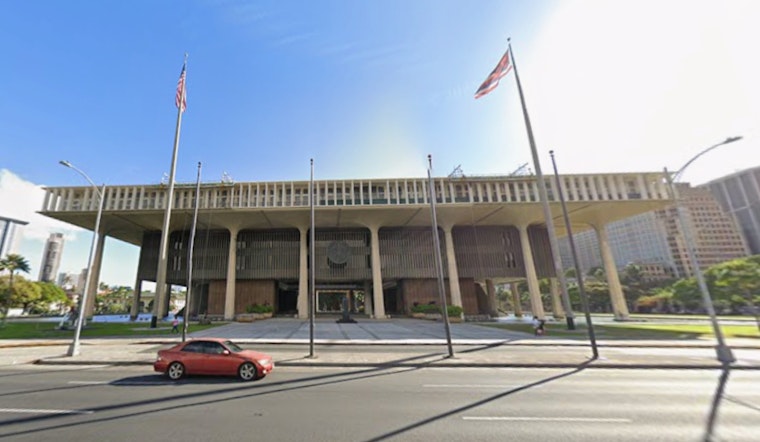
Hawaii is pushing back against a federal lawsuit that seeks to stop the state from suing major fossil-fuel companies over climate-related damages, arguing that its state-law claims should proceed despite Washington’s regulatory authority. The case follows a similar DOJ challenge in Michigan, which was recently dismissed by a federal judge as too speculative, raising the stakes for Hawaii’s legal fight.
The Department of Justice filed its suit on April 30, 2025, claiming federal law pre-empts Hawaii’s planned claims, positioning it as a defense of Washington’s greenhouse-gas regulatory power. Hawaii’s legal team is closely watching the Michigan ruling, which ended with the court dismissing the DOJ’s pre-emptive challenge, as a potentially favorable precedent, as reported by AP News.
State suit and the response
Hawaii launched its own offensive on May 1, 2025, filing a circuit-court complaint that targets major oil companies and the American Petroleum Institute. The suit accuses them of running a decades-long campaign of deception that allegedly helped drive climate harms across the islands. In a May 1 press release, Governor Josh Green and Attorney General Anne Lopez blasted the DOJ lawsuit as an illegal attempt to meddle in the state’s case and vowed to push ahead for damages and broader relief.
According to the governor’s office, Hawaii is seeking compensatory and punitive damages along with remedies for injuries to public-trust resources. As outlined by that office, the complaint stacks up a familiar but hefty list of claims, including public and private nuisance, failure to warn, negligence and unfair business practices.
Where the federal case stands
Back in federal court in Honolulu, Hawaii formally answered the DOJ’s complaint on June 30, 2025, then followed up with a motion for judgment on the pleadings on July 25, 2025. A hearing that had been on the calendar for Jan. 27, 2026 did not happen; Senior Judge Helen W. Gillmor vacated that date, ordered additional briefing and said she would set a new schedule later. That procedural shuffle is reflected in the federal docket and in the records compiled by the Civil Rights Litigation Clearinghouse.
Why the Michigan ruling matters
The Michigan ruling looms large because it undercuts the idea that DOJ’s pre-emptive climate suits are on a smooth path to victory. Legal observers say Judge Beckering’s opinion, and her conclusion that the case in front of her was unripe and too speculative, could influence how other federal courts approach similar fights over preemption, extraterritorial reach and the boundaries of federal power.
The Michigan docket shows that the government’s case there was dismissed for lack of subject-matter jurisdiction, a dry label for a result that Hawaii’s lawyers are treating as a useful datapoint as they brief the Honolulu court.
Legal stakes
At the core of the dispute is a high-impact legal question: when states sue oil and gas companies for climate-related damages under tort law, are they really trying to regulate greenhouse-gas emissions in a way that is pre-empted by the Clean Air Act? The Justice Department argues that allowing an array of broad state cases would interfere with the federal regulatory scheme and possibly spill into interstate commerce and foreign-affairs territory.
Hawaii, by contrast, insists that its lawsuit fits squarely within traditional state-law tools aimed at corporate deception and local harms. Tracking updates from the Sabin Center for Climate Change Law note that the case raises threshold issues that could easily end up tested by multiple levels of the federal courts.
What to watch next
The next key move is procedural, not dramatic: watch for the briefing schedule Judge Gillmor sets and for any hints that either side will push for expedited appeals. That timing will decide whether Hawaii’s state case keeps moving in the near term or gets parked while federal judges hash out jurisdiction and pre-emption.
The Michigan dismissal shows that DOJ’s theory can be turned back, but there is no guarantee Honolulu will follow the same script. Outcomes will hinge on the record the parties build and on whether appellate courts step in. For now, local coverage and the federal docket are still the best way to track the play-by-play. As reported by the Honolulu Star‑Advertiser, the case will move forward as the courts set a new schedule and the parties flesh out their briefs.





