

























































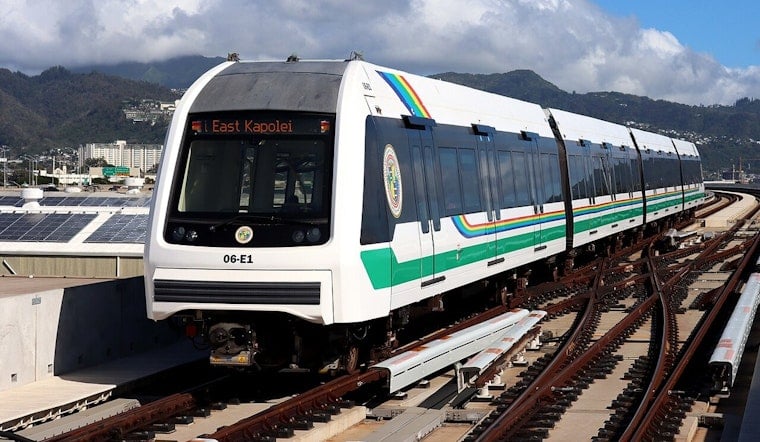
Hawaiʻi’s four county mayors have quietly hit pause on a controversial idea to ask state lawmakers this year for a 20-year extension of the half-percent general excise tax surcharge that critics have branded the “rail tax.” Instead, they will wait and come back in 2027 after doing more financial homework, a move that conveniently keeps the fight out of the 2026 election cycle, when a tax battle would almost certainly become campaign fuel.
Mayors tap the brakes and ask for more time
Honolulu City Managing Director Mike Formby said the mayors “agreed to postpone a request for a GET extension until 2027” so counties, and especially Honolulu with its rail obligations, can finish their financial due diligence and give lawmakers enough data to seriously vet any proposal. Formby stressed that county leaders are not walking away from the idea of an extension, only pushing the formal ask down the road.
Communications professor John Hart warned that trying to pass a tax extension in an election year practically hands challengers a ready-made talking point to use against incumbents, as reported by Honolulu Civil Beat.
How the surcharge started and what it actually covers
The half-percent county surcharge first kicked in for Oʻahu in 2007 as a temporary revenue stream to help pay for Honolulu’s rail project. State law also lets other counties adopt the surcharge on their own timelines. It applies only to activities that are already taxed at the state’s 4% general excise tax rate and, under current law, is set to expire on December 31, 2030.
The legal structure and dates are laid out by the Hawaii Department of Taxation, while Maui’s own ordinance, which took effect on January 1, 2024, is detailed in a release from Maui County.
Big money riding on a half-percent
The stakes are not small. In 2024 alone, the surcharge generated more than $351 million for Honolulu, roughly $77 million for Maui, about $74 million for Hawaiʻi County and nearly $37 million for Kauaʻi. That cash has underwritten rail construction on Oʻahu and funded transportation projects on the neighbor islands.
For Honolulu, the surcharge remains a crucial pillar in the funding plan for the still-unfinished Skyline rail system. On the neighbor islands, local officials have channeled the money into roads, transit, and housing infrastructure. Those statewide totals and the mayors’ decision to delay the extension push were reported by Honolulu Civil Beat.
Why leaders say they are holding off
Kauaʻi Mayor Derek Kawakami pointed to visible projects paid for with the surcharge, including the resurfacing of 252 lane miles since 2018, and acknowledged that tight state budget choices make a long-term extension a tougher political sell right now. The mayors say they would rather come back with detailed, vetted financial projections than push for a multi-decade tax commitment during a session already dealing with federal funding cuts and competing priorities.
That strategy, they argue, should put them in a stronger position when they return to the Capitol with their case for an extension.
What happens between now and 2027
For now, the surcharge keeps running under its current schedule, with the 2030 sunset date still on the books. County leaders expect to return to the Legislature in 2027 armed with detailed modeling on revenue needs and project timelines.
The delay might give incumbents some political cover, but it does not resolve the deeper question of whether counties should be able to secure a multi-decade revenue stream that might otherwise support state-level priorities. Lawmakers, county officials and transportation planners will still have to hammer out the shape of any future extension and decide who ultimately shoulders the cost of the projects it bankrolls.





_Arriving_at_Ahua_Station_westbound_2025-11-24.jpg)