

























































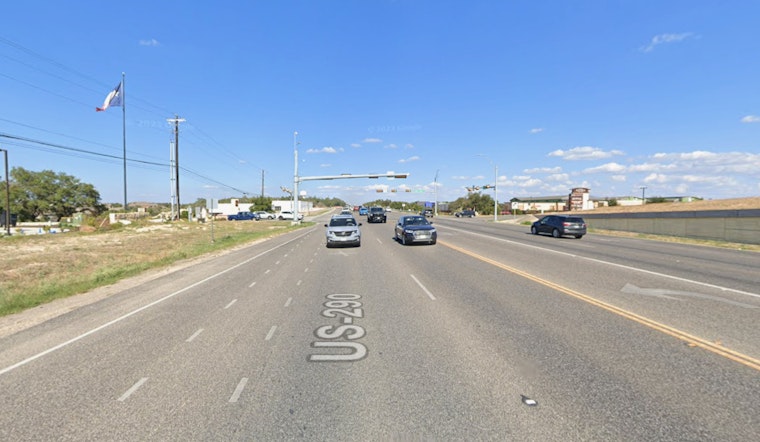
The Hill Country’s quiet back roads are lining up for a major makeover. TxDOT is moving to position three fast-growing corridors for big widenings, including a 12½-mile stretch of U.S. 290 out of Dripping Springs that could grow to six lanes in spots. If it all goes forward, commutes and rural stretches alike would be reshaped as Austin’s suburban edge keeps pushing south into Hays County.
The agency has applied for design grants to study and prepare schematics for expansions on U.S. 290, RM 1826, and RM 12. The work could widen the 12½‑mile U.S. 290 segment from Rob Shelton Boulevard to the RM 1826 crossing, convert a roughly 12‑mile section of RM 1826 into a four‑lane divided highway, and add safety and mobility improvements along about nine miles of RM 12. Those corridors have seen major jumps in daily traffic in recent years, and Hays County’s population has surged as well. These project descriptions and traffic trends were reported by the San Antonio Express-News, and population figures come from the U.S. Census Bureau.
A CAMPO review team will score the grant applications and present recommendations to the agency’s Transportation Policy Board, where projects are folded into the regional Transportation Improvement Program for funding consideration. The TIP spells out how projects are prioritized and how amendment cycles accept new requests, which is the next procedural step for TxDOT’s proposals; see CAMPO for details on the Transportation Improvement Program.
Local officials are being asked to back the submissions even as the county wrestles with lingering legal and funding questions. A judge later ruled the 2024 $440 million road-bond election void because the county gave insufficient public notice, and Hays County leaders have discussed issuing certificates of obligation to keep the 30 priority projects moving while the ruling is appealed, according to local coverage. Wimberley View has more on the court decision and the county response.
Oak Hill Parkway Is Already Underway
Nearby construction on the Oak Hill Parkway - the U.S. 290 rebuild between MoPac and RM 1826 - offers a preview of the scale TxDOT is contemplating farther west. The Oak Hill project is adding two to three main lanes in each direction, along with frontage roads, new intersections, and flyovers. TxDOT has held open houses and public meetings as part of that environmental and design process; see the agency’s project materials for the Oak Hill study for background. TxDOT documents detail the corridor study and public involvement.
Where The Funding Would Come From And What Happens Next
If CAMPO endorses the design grants, TxDOT plans to pursue federal money through the Federal Highway Administration’s Surface Transportation Block Grant program, a flexible pot of federal funds that metropolitan planning organizations and states use to advance regionally important roadwork. Detailed environmental reviews, right-of-way work, and construction funding would follow approvals, and TxDOT says cost estimates for the proposed Hill Country stretches are not yet available. See the Federal Highway Administration overview of the Surface Transportation Block Grant program and recent reporting for the status of local cost information.
What to watch next: a Hays County commissioners court vote on whether to formally support the grant applications, CAMPO’s technical review, and the board’s TIP actions this spring and summer. Those steps, along with the political fight over how to pay for decades of road work, will help decide whether these corridors stay mostly rural or evolve into the region’s next big suburban highways.





