

























































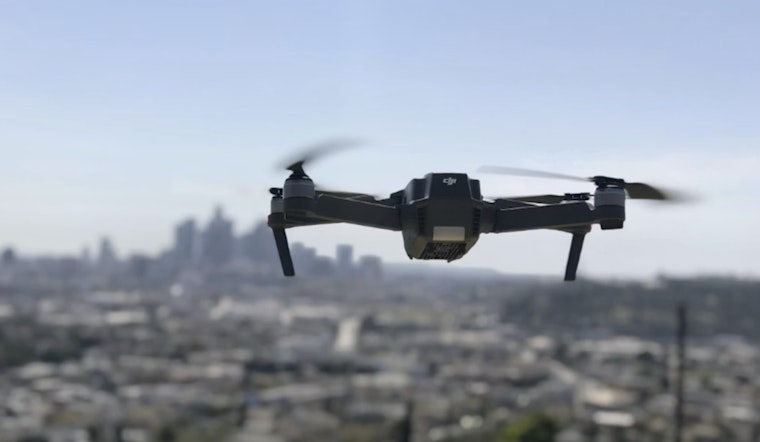
Houston startup Paladin Drones is giving first responders a new way to look down on emergencies, literally. The company has rolled out the Knighthawk 2.0, a faster, defense‑supply‑chain‑compliant drone built to deliver near‑instant aerial views for police and fire crews. Paladin says the upgraded model boosts speed and sensor performance so operators can see detailed imagery from hundreds of feet away and get “eyes on” a scene in well under two minutes. For now, the company is flying the system only inside the Memorial Villages while it fine‑tunes operations and works through community and regulatory questions.
As reported by Houston Chronicle, Paladin debuted Knighthawk 2.0 at the World Defense Show in Saudi Arabia, developed in partnership with Portuguese manufacturer Beyond Vision. The Chronicle also notes that Paladin told reporters the craft complies with provisions of the National Defense Authorization Act and can beam back footage from several miles away in as little as 70 seconds, depending on conditions.
What Knighthawk 2.0 Can Do
The Knighthawk 2.0 combines thermal imaging with an upgraded optical zoom that Paladin says can read license plates from roughly 200 feet away, and it can fly at more than 40 mph. According to Paladin, the system relies on LTE‑enabled docks and a Watchtower command platform to push live video into dispatch centers, with an average “eyes on” time around 90 seconds. The company also promotes tools and support intended to help departments pursue FAA waivers and stay in ongoing compliance.
Where Paladin Is Flying Now
Right now Paladin’s operational footprint is confined to the Memorial Villages, where the company is testing workflows and community outreach in a relatively controlled environment. As reported by Houston Chronicle, the startup, founded in 2018 by Divy Shrivastava, says it works with more than 100 departments across 25 states and employs roughly 40 people, most of them in Houston. Paladin has set an ambitious target: it wants UAVs available to respond to every 911 call in the country by 2027.
Local Rollout and Privacy Measures
Shrivastava and company materials say starting in smaller communities lets Paladin refine protocols and bake privacy protections into operations early, instead of scrambling to bolt them on later. According to Paladin, the system is built so footage feeds into dispatch systems rather than public streams, and internal policies are meant to limit persistent surveillance. The Memorial Villages rollout is described as a testbed for technical safeguards, oversight structures and public outreach before Paladin tries to expand more broadly.
How Departments Use the System and Regulatory Hurdles
Paladin pairs docked Knighthawk drones with its Watchtower control platform so operators can drop a pin on a likely incident location and automatically send a craft, as TechCrunch detailed when it profiled the company and its early push to secure beyond‑visual‑line‑of‑sight waivers. Industry reporting has also highlighted Paladin’s effort to extend LTE connectivity and add modules for common drone platforms to increase range and reliability, Firehouse notes in a trade release. Those regulatory and technical pieces will be crucial if the company wants to move beyond a handful of pilot cities.
For Houston‑area emergency services, Paladin’s technology could mean faster situational awareness when seconds really matter, but the path to scale still runs through federal regulators, local residents and the realities of day‑to‑day field use. City and county departments weighing drone‑as‑first‑responder programs are likely to watch the Memorial Villages rollout closely as an early test case. We will continue to track deployments and local policy responses as Paladin works to expand beyond its initial footprint.





