

























































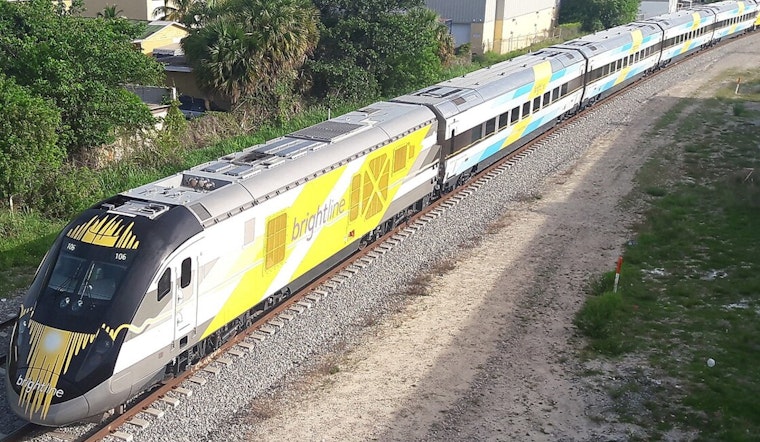
That long-promised high-speed ride from Los Angeles to Las Vegas will not be greeting Olympic crowds after all. Brightline West now says its 218-mile all-electric rail line, which will largely run in the median of Interstate 15 and is designed to hit speeds up to 200 mph, will not be finished until late 2029. As crews move deeper into heavy civil work and the budget and financing plan keep shifting, the long-touted two-hour rail link between the two metros is getting pushed back, along with hopes that drivers and short-haul flyers would soon have a new option.
Antonio Castelan, Brightline West's director of public relations, confirmed the new timetable in a statement to Equipment World, saying the formal completion date is now late 2029. That report also cites a U.S. Department of Transportation document pegging the project's all-in cost at about $21.5 billion and showing Brightline West seeking roughly a $6 billion federal loan.
Industry coverage says Brightline is now in the "civil construction" phase as it prepares the I-15 corridor and has told local television outlets that its schedule is being revised, according to Trains. The current plan still calls for four stations: one near the Las Vegas Strip and three in Southern California at Victor Valley, Hesperia and Rancho Cucamonga, with the Rancho Cucamonga stop set up to connect to Metrolink service into greater Los Angeles.
To keep construction moving, Brightline has been piecing together a mix of private and public funding. Private activity bonds totaling $2.5 billion were sold in March 2025, according to Equipment World. The company is still seeking additional federal loans along with more private equity to cover rising civil-works costs.
What It Means For Travelers And The Climate
Brightline says the train will cut the L.A.-to-Vegas trip to about two hours, a clear upgrade from the roughly four-hour drive on most days. Its own estimates suggest the all-electric system would trim greenhouse-gas emissions by more than 400,000 tons a year, according to Brightline West. Those promised time savings and climate benefits are central to the company's pitch as it pursues federal loans and local approvals at a moment when costs are climbing.
Company leaders have publicly acknowledged the schedule shift as the price tag has grown. In an interview cited by Forbes, one executive said, "We'll finish the entirety of it and be open for business in the fall of 2029." Brightline says the extra time will be used for extensive testing and coordination across the bi-state corridor.
Next up: the company still has to lock in construction contracts, close the remaining financing gap and obtain any outstanding permits before major track work can start in earnest. Industry analysts note that the U.S. Department of Transportation's review of Brightline's loan request, along with the timing of local approvals, will be key to whether the late-2029 target holds.
Communities from Rancho Cucamonga and Victor Valley to the Las Vegas Strip will want to keep an eye on the upcoming financing milestones, since shifts in the budget could ripple into station buildouts and local transit connections. Hoodline has previously tracked the project's escalating price; for more background, see Costs Soar to 21 Billion.





