

























































Months after an arrest that sent a chill through New York’s protest press corps, Manhattan prosecutors on Tuesday, Feb. 24, moved to toss the criminal case against photographer Alexa Wilkinson, effectively wiping out the lone charge that had hung over their work and livelihood.
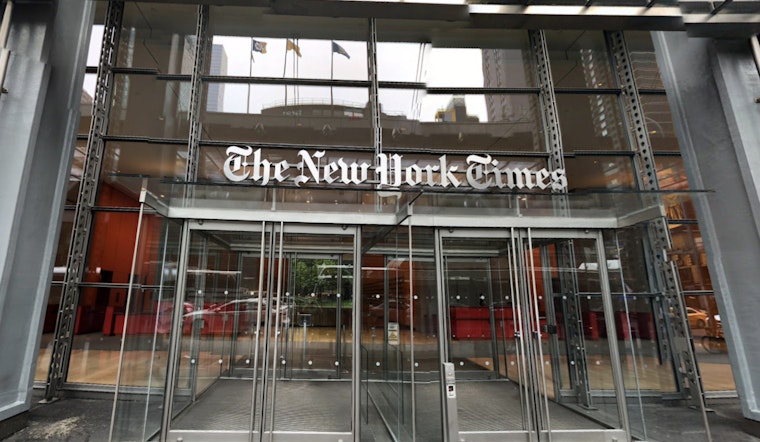
Wilkinson, who uses they/them pronouns, was arrested in September 2025 following protests at The New York Times’s Midtown headquarters the previous summer. They were accused in a criminal complaint of aggravated harassment as a hate crime, tied to social media posts and to their coverage of a July 30 demonstration at the paper’s building. With the dismissal, the months of uncertainty that Wilkinson and press freedom advocates say upended their income, housing stability and ability to keep working as a photojournalist are, at least on paper, over.
Terra Brockman, Wilkinson’s attorney with the Legal Aid Society, told Hyperallergic the case was dropped because there was “insufficient evidence to prove the allegations beyond a reasonable doubt.” The Manhattan District Attorney’s office told the same outlet the dismissal came “following a thorough investigation” and declined to elaborate. Wilkinson, for their part, told Hyperallergic they intend to keep practicing photojournalism and expect to continue working as a credentialed member of the New York press.
Prosecutors had charged Wilkinson with aggravated harassment in the second degree, with a hate crime enhancement, alleging that social media posts and a video identifying 11 New York Times employees amounted to a threatening communication. As reported by Jacobin, the complaint pointed to screenshots and an Instagram post that referenced a post reading “They hanged newspaper editors at Nuremberg,” along with a caption naming the paper’s executive editor.
Supporters and reporting say the arrest was followed by a search of Wilkinson’s home and the seizure of their photography gear, including laptops, hard drives and a camera, which Wilkinson says effectively cut off their main source of income. Coverage by the Freedom of the Press Foundation details how the loss of equipment, combined with the uncertainty around the case, pushed Wilkinson to replace gear and pull back from covering certain protests. Advocates argue those ripple effects are key to understanding what the case meant in practice for working journalists.
Legal Questions and Standards
Defense attorneys and civil liberties groups say the prosecution raised a thorny question that keeps resurfacing in the digital age: when does sharp political criticism cross the legal line into a criminal threat? Legal experts quoted in Jacobin noted that political rhetoric seldom meets the “true threats” standard courts require before speech can be treated as criminal conduct. That debate underscores ongoing tension over how far prosecutors should go when using bias-motivated statutes in cases that turn on online posts and proximity to protest activity rather than physical violence.
Broader Pattern and Pushback
Press freedom organizations say Wilkinson’s ordeal looks familiar. In recent years, they argue, journalists and documentarians who show up to record protests have increasingly found themselves swept into criminal cases, only to see some of those charges later dropped. The Freedom of the Press Foundation and allied groups have repeatedly warned against treating documentation as participation and against broad equipment seizures that can chill newsgathering. Those advocates say the DA’s decision to walk away from the Wilkinson case will be closely watched as a test of how New York weighs public safety concerns against First Amendment protections for on-the-ground reporting.
With the charge now dismissed, Wilkinson and their lawyers have called the outcome a relief, while stressing that the process itself, including the seizure of essential equipment, left concrete and ongoing scars. Wilkinson told Hyperallergic they look forward to continuing their work as a credentialed New York journalist, even as legal observers continue to spar over how hate crime laws should apply to reporters and photographers who document civil unrest.



