

























































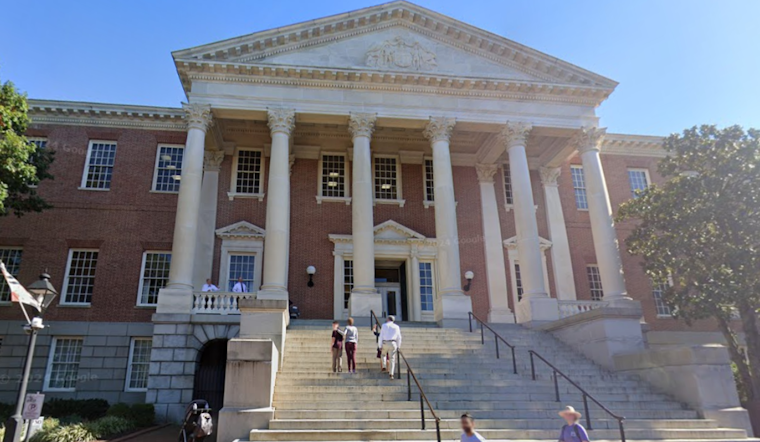
Maryland lawmakers just voted to draw a bright line at the schoolhouse door when it comes to federal immigration enforcement. Today, the House of Delegates approved a bill that would prevent public-school security staff from helping Immigration and Customs Enforcement carry out investigations on school property. The measure, sponsored by Del. Eric Ebersole of Baltimore County, passed 90-34 and now heads to the Senate.
According to the Maryland Daily Record, the proposal would bar school resource officers and other security employees from taking part in federal immigration-enforcement activities or turning over student or employee education and personnel records to ICE for investigative use. House Judiciary Committee members also widened the bill’s definition of a “sensitive location,” so it covers designated school bus stops, school vehicles, and places where food is distributed to people in need. Supporters say school districts have been asking for clear instructions on what to do when federal agents show up near school grounds.
What the bill says
The Maryland General Assembly bill text defines “public school security personnel” to include school resource officers, school security workers, and law enforcement officers who provide coverage to a school system under interagency agreements. The bill would prohibit those personnel from participating in immigration enforcement under §287(g) and from sharing records for immigration investigations unless ICE presents a judicial warrant, subpoena, or other legal order.
When such legal orders do arrive, the measure instructs staff to immediately notify the county superintendent and the school system’s legal counsel. The act is written to take effect July 1, giving districts some runway to adjust policies before the rules kick in.
Lawmakers' debate
Del. Nicole Williams told the Maryland Daily Record that legislators had heard from “various school systems” looking for guidance on how to handle ICE requests. House Judiciary Chair J. Sandy Bartlett backed the bill as a precaution, saying that “unfortunately, what has happened is that outside of the school, children and parents have been abducted and detained by ICE.”
Republicans on the House floor questioned whether the legislation responds to a widespread problem in Maryland at all, suggesting the state might be legislating against scenarios that are rare or nonexistent in local schools. The bill still cleared the chamber, with some bipartisan opposition recorded in the final tally.
Where it goes next
Over in the Senate, a companion bill sponsored by Senate Majority Leader Nancy King is queued up for a hearing in the Education, Energy, and the Environment Committee on March 4, according to the Senate bill page. If the Senate signs off on a matching version, the package would land on Gov. Wes Moore’s desk for signature, setting the implementation timeline that is already written into the House bill.
Part of a broader push
The school-focused measure is just one piece of a wider effort in Maryland to put some distance between local institutions and federal immigration enforcement. State lawmakers have pursued limits on formal 287(g) agreements between local police and ICE, and counties such as Howard have recently moved to block privately run detention centers and curb ICE access, as reported by the AFRO. Backers argue that these policies help maintain trust between immigrant communities and schools or local government, while critics warn they could make cooperation harder in serious criminal cases.
If the bill becomes law, school districts are expected to work with county superintendents and legal teams to rewrite protocols and train security staff on the narrow exceptions for responding to valid court orders. Families can likely expect new guidance from local education officials, while senators prepare for what is shaping up to be a full-throated debate in Annapolis when the cross-filed bill comes up in committee.




