

























































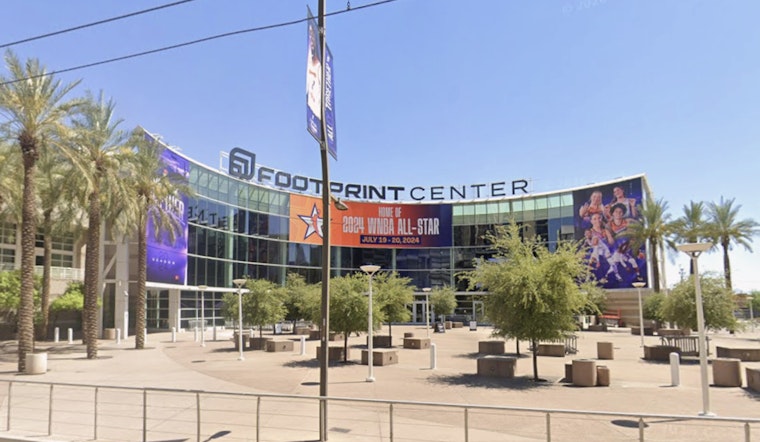
Downtown Phoenix is being quietly teed up for a transformation into a full-blown sports-and-entertainment corridor, and it is not just about basketball anymore. Private investors and team owners are sketching out upgrades around Footprint Center that could turn occasional game nights into steady, year-round foot traffic. That vision has picked up steam as Player 15 Group, the umbrella ownership entity for the Suns and Mercury, has shifted key operations closer to the arena and started rethinking how every square foot gets used.
Player 15's downtown bet
Mat Ishbia’s Player 15 Group has opened a new 76,000-square-foot headquarters just south of Footprint Center and is building a separate practice compound for the Phoenix Mercury as part of a roughly $100 million-plus investment in the warehouse district. As reported by KJZZ, the move freed up about 50,000 square feet inside the arena, space Ishbia has floated for restaurants, bars, family amenities and other fan-focused uses. Public materials from Player 15 Group frame the shift as a way to knit team operations, arena management and surrounding development into a single, coordinated strategy.
Hockey as an anchor?
At a recent Urban Land Institute Trends Day panel, Player 15’s chief innovation officer, Paul Rivers, put a bigger possibility on the table: that landing a National Hockey League franchise for Arizona is now seen as a local priority. That comment, and the larger downtown game plan around it, were laid out in coverage by The Arizona Republic. Rivers also appeared on the ULI program that brought together real estate and sports executives to talk about how modern arenas can serve as anchors for mixed-use districts instead of just single-purpose venues. If Player 15 were to chase an NHL team, developers say it could give downtown Phoenix the kind of reliable winter-season tenant that pairs neatly with concerts and the NBA calendar.
Why the gap matters
Arizona has not had a full-time NHL franchise since the Coyotes were sold and moved to Utah in 2024, a departure that left a noticeable hole in the state’s sports calendar and raised questions about how strong the hockey appetite really is here. The Coyotes’ exit, coupled with a failed Tempe arena referendum in 2023, is often cited as proof that any future franchise would need deep private capital and a rock-solid site plan from day one, as reported by Cronkite News. Local officials and developers say any serious push to land an NHL club will come with intricate negotiations over land use, traffic patterns and how the whole thing gets financed.
What a hockey anchor could change
Supporters argue that adding a second major pro tenant to Footprint Center would help turn the surrounding blocks into a true year-round destination, with enough steady activity to lure new hotels, restaurants and nightlife that traditional office towers alone have not been able to sustain. Economic boosters point to Player 15’s recent spending in the warehouse district and to national examples where arenas have kicked off waves of nearby development, a theme that has come up on recent industry panels and in coverage by Rose Law Group Reporter as well as trade reporting on the emerging Player 15 campus. Skeptics, however, point out that league approval, a realistic funding blueprint and genuine community support are all heavy lifts that could keep the hockey talk stuck in the concept stage for a long time.
No formal NHL bid has been filed, and Player 15 officials have not offered any timetable for a potential expansion effort when contacted through their public relations channels. For now, the conversation at trade panels, city planning meetings and even inside Footprint Center itself is just as focused on activating underused square footage as it is on the prospect of bringing big-league hockey back to the desert.





