

























































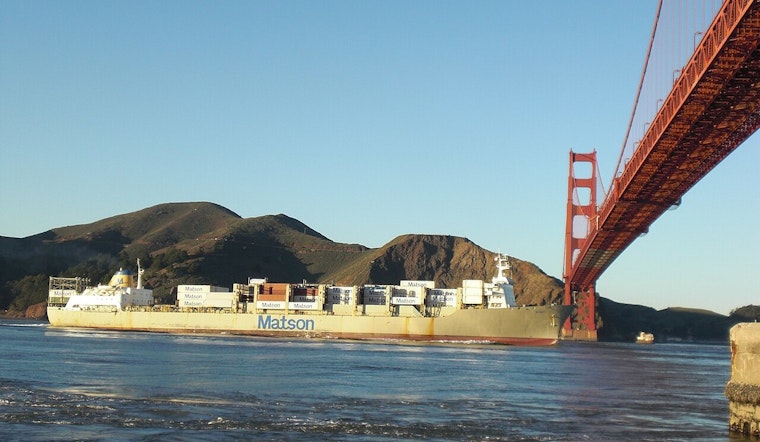
Matson is getting ready to pour serious money into the water. The Honolulu-based carrier’s newly filed 2025 annual report maps out a hefty pipeline of spending, with new ships, terminal upgrades and continued share buybacks, all while the company stayed profitable in a year of softer Asia volumes. The Form 10-K shows a company doubling down on faster, cleaner vessels and a bigger Sand Island footprint as it pivots toward LNG-ready ships. For Honolulu, that translates into more port construction, equipment upgrades and steady activity around Honolulu Harbor over the next two years.
According to the company’s Form 10-K, filed with the SEC, Matson reported total operating revenue of $3,344.5 million and net income of $444.8 million for 2025, with operating income of $499.8 million and basic earnings per share of $13.99. The filing also shows Matson paid $44.9 million in dividends, or $1.40 per share, and reduced total debt by about $39.7 million. All of that came in a year when container volumes from China slid and Alaska volumes softened compared with the prior year.
Matson also sent more cash back to shareholders, repurchasing roughly 2.7 million shares for about $307.4 million and leaving roughly 1.1 million shares still available under the current buyback program, as reported by TradingView. Executives frame the buybacks and dividend as part of a balanced capital plan that also keeps plenty of dry powder for the big vessel milestone payments coming due.
Fleet Renewal And Aloha Class Vessels
Matson is pressing ahead with a roughly $1.0 billion program to add three new Aloha class containerships that will be LNG ready and equipped with green ship technology, with deliveries scheduled in 2027 and 2028, the company said in a press release. The new vessels are expected to add about 500 containers of capacity per China voyage and will be deployed on the CLX and Hawaii services. Matson has already paid a portion of the construction milestone payments and expects further scheduled payments through 2026 and 2027.
What It Means For Honolulu Ports
The filing and related summaries note that Matson has completed phase one of Sand Island terminal modernization and is moving ahead with phase two, with plans for a broader expansion into Pier 51A and portions of Pier 51B once Pasha Hawaii relocates to the Kapalama Container Terminal in 2027. Phase one included installation of new 65 ton gantry cranes and electrical upgrades, while upcoming work will focus on yard, gate and backup power improvements to boost resilience. For the islands, that should mean steady dockside work and more modern container handling capacity rather than surprise bottlenecks.
Risks To Watch
The company’s Form 10-K warns that any repeal, invalidation or amendment of the Jones Act could allow lower cost competitors into the Hawaii and Alaska trades and materially affect Matson’s competitive position. The filing also flags fuel price volatility, uncertainty around alternative fuels such as LNG, and possible shipyard or delivery delays that could drive up costs. Cybersecurity and labor risks are also on the list, given that either could disrupt operations. With a significant share of Matson’s ocean revenue tied to Jones Act trades, regulatory or construction setbacks would be meaningful for the business.
Bottom Line For Honolulu
Matson expects to spend between $575 million and $595 million in 2026, largely on new vessel milestone payments, maintenance and terminal work, and the company says operating income for ocean transportation should approach 2025 levels while logistics income remains comparable, according to TradingView’s summary of the filing. For Honolulu, that likely points to continued equipment upgrades, contractor activity and a steadier schedule of container movements as new ships and terminal projects come online. Matson still cautions that execution risks tied to fuel costs, shipyards and regulatory developments could shift that timeline.





