

























































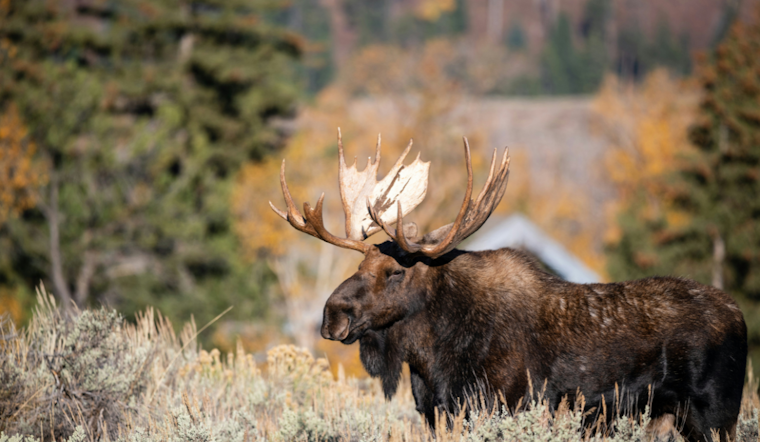
Michigan's moose population has seen a significant downturn, dropping from 426 individuals in 2023 to just about 300 in 2025, as per a new survey. Wildlife specialists are scrambling to understand what's behind the dip, which stands in contrast to the population's previous stability through the 2010s and early 2020s. Tyler Petroelje, a wildlife specialist with the Michigan DNR, emphasized the need to investigate moose distribution across the landscape, "we’re very interested in, in our current moose-collaring effort," he told WNEM.
Efforts to monitor the moose more closely kicked off last February with a partnership between the Keweenaw Bay Indian Community, the DNR, and Northern Michigan University. Together, they fitted 20 moose with GPS collars. This method of "helicopter darting" is considered effective and safe for capturing the animals quickly—a necessity given the urgency of the population situation. UpNorthLive reports that the majority of these GPS-collared animals are still alive, with a high survival rate.
In the upcoming weeks, an additional 43 moose are slated to be collared as a part of the study. Professor Diana Lafferty from Northern Michigan University described the intent of the efforts, saying, "Our intent is to investigate and uncover the factors that might be limiting moose population growth," as detailed in a feature by Michigan Public Radio. The study goes beyond just tracking as it also involves disease surveillance and diet analysis through fecal pellet collection.
Given that over 60 animals have been killed in vehicular collisions in the last three years, understanding moose movement patterns is crucial. Experts worry that as moose navigate out of the core areas, they might increasingly come into conflict with roadways—a deadly mix for Michigan's moose. "And moose and roads don't get along particularly well," Lafferty told Michigan Public Radio. Besides collisions, other threats include predation by wolves and black bears, as well as winter ticks, which can lead to severe hair loss and blood loss, exacerbating the struggle against the harsh winters.
As Michigan's moose face an uncertain future, it's imperative that these studies yield actionable insights. Researchers and wildlife specialists remain committed to investigating the various factors at play, hoping to stabilize, if not improve, the moose population in the state.





