

























































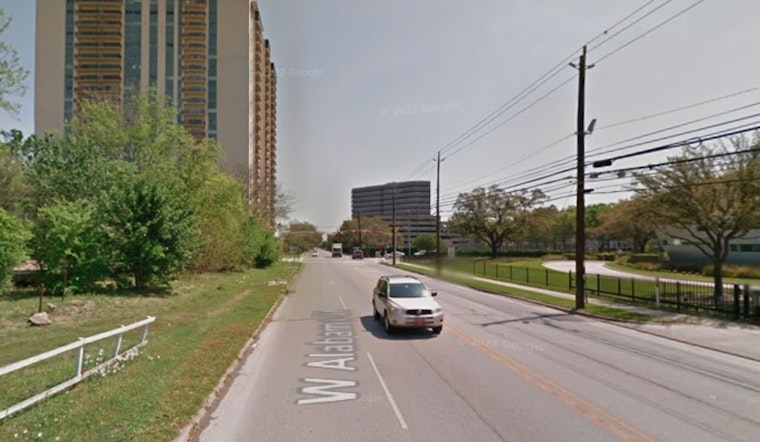
Montrose neighbors are not quietly accepting a major makeover of West Alabama Street. A coalition of residents, churches and businesses is publicly urging the Montrose Tax Increment Reinvestment Zone to scrap its current $28.5 million redesign and restore a 2022 plan they say put people first.
In a public letter, the group argues the latest concept widens travel lanes, keeps a continuous center-turn lane and drops a dedicated bikeway through one of the city's densest, most walkable corridors. Advocates warn that trading traffic-calming and bike protection for extra car space could make an already crash-prone stretch even more dangerous in front of schools, parks and small businesses.
Members of Friends of the Boulevard delivered the letter during a recent TIRZ comment period, with signatures from 51 organizations, including about 35 local businesses, according to the Houston Chronicle. The paper reported that a Texas Department of Transportation crash query found 484 reported crashes on the corridor from 2016 through early 2026, with an estimated $57 million in impacts. Speakers urged the board to return to the earlier, community-backed design that featured a protected bikeway and other safety features.
Why Residents Say The Redesign Is A Step Backward
Opponents trace the shift in direction to a 2024 reshuffle of the Montrose TIRZ board and to Mayor John Whitmire's stated mobility principles, which place a strong emphasis on preserving lane width for cars. Neighbors argue the new plan favors wider lanes over a true multimodal design and undercuts years of public engagement that envisioned West Alabama as a calmer, safer, more walkable street.
Houston Public Media has reported that residents and some City Council members are pushing back more broadly, warning that repeated redesigns waste taxpayer dollars and pass up potential safety gains.
Engineering Tradeoffs: Lanes, Trees And Sidewalks
Consultants with engineering firm HR Green told the board that early preliminary work anticipated 12-foot travel lanes. The city ultimately approved an 11-foot standard instead, which keeps the roadway at roughly 33 feet wide and, according to engineers, helps preserve existing trees and sidewalk buffers.
"Safety is always budget No. 1 on every single project. Alabama is no exception," an HR Green representative said at the meeting. The compromise on lane width, combined with the decision to retain a center-turn lane instead of installing a protected bikeway, is at the heart of the dispute, advocates say, according to the Houston Chronicle.
Money And The Missing Federal Condition
The full reconstruction is priced at $28.5 million and will be paid for by three local TIRZ districts, with Montrose responsible for roughly $11 million, Community Impact reported.
On the federal side, Congresswoman Lizzie Fletcher requested $10 million through the Community Project Funding process to support a multimodal rebuild. Her office's public list shows that $0 was ultimately awarded, meaning there are no federal strings attached that would require bike infrastructure to be included. Advocates say the lack of federal dollars removes one of the few levers that might have forced a protected bikeway into the final design, according to Rep. Lizzie Fletcher's office.
What Happens Next
The project is still in preliminary design and will return to the TIRZ board for further review. Engineers expect to complete final design work this year, with construction starting afterward and stretching into a late-2026 through 2028 window, depending on approvals.
Once the design is locked in, the construction phase alone could take roughly two years, according to estimates from HR Green reported by Houston Public Media. Residents and business owners say they plan to keep pressing the board to restore bike lanes and traffic-calming measures before anything is finalized.
For now, the West Alabama fight is turning into a neighborhood test case for how much public feedback can actually move big-ticket infrastructure projects. In Montrose, the argument is not just about concrete and asphalt. It is about what kind of street, and what kind of neighborhood, people want West Alabama to be.





